Jurassic Ocean
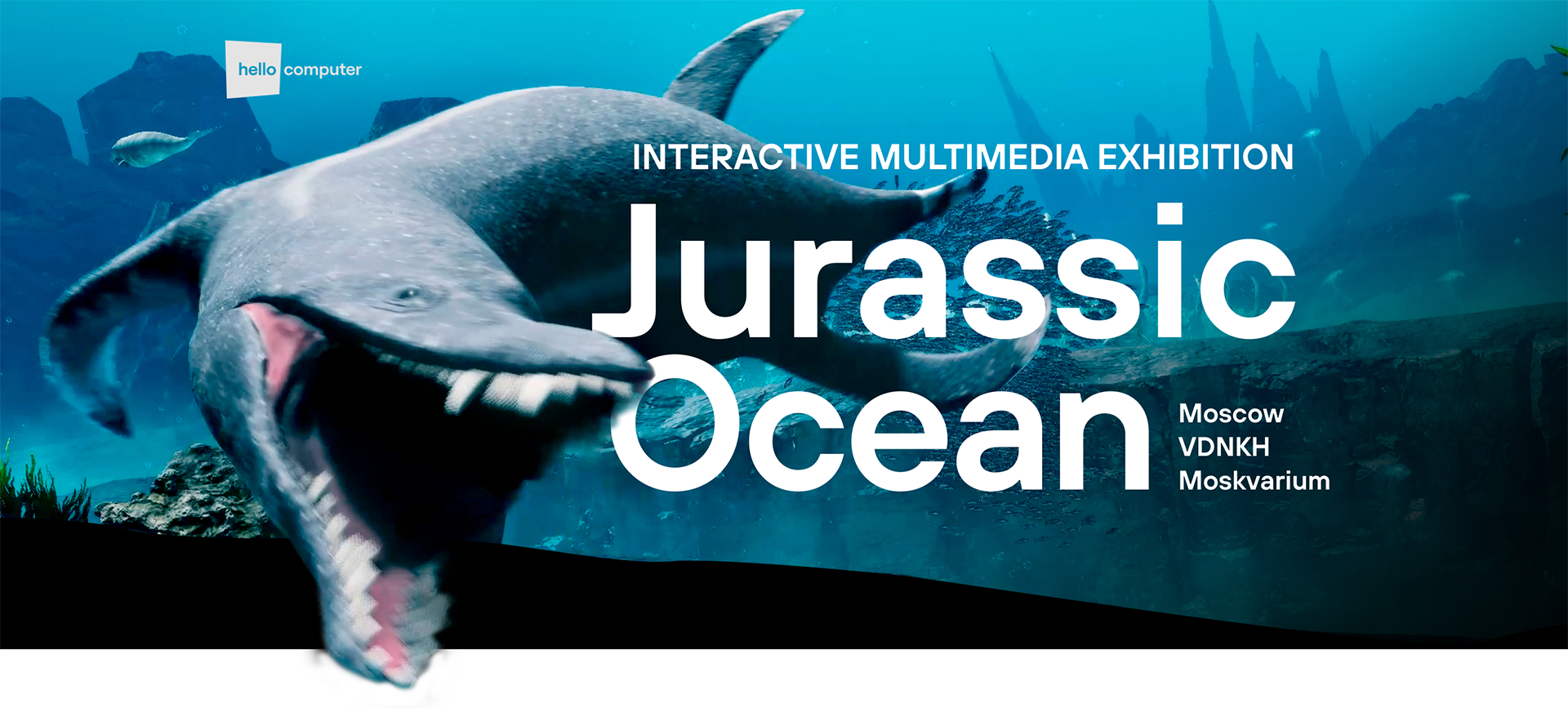
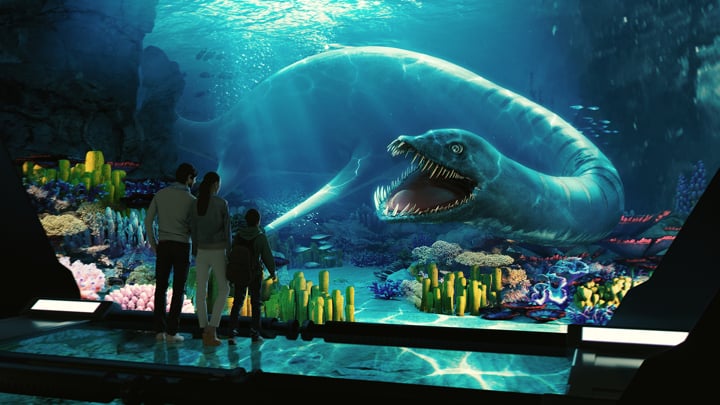
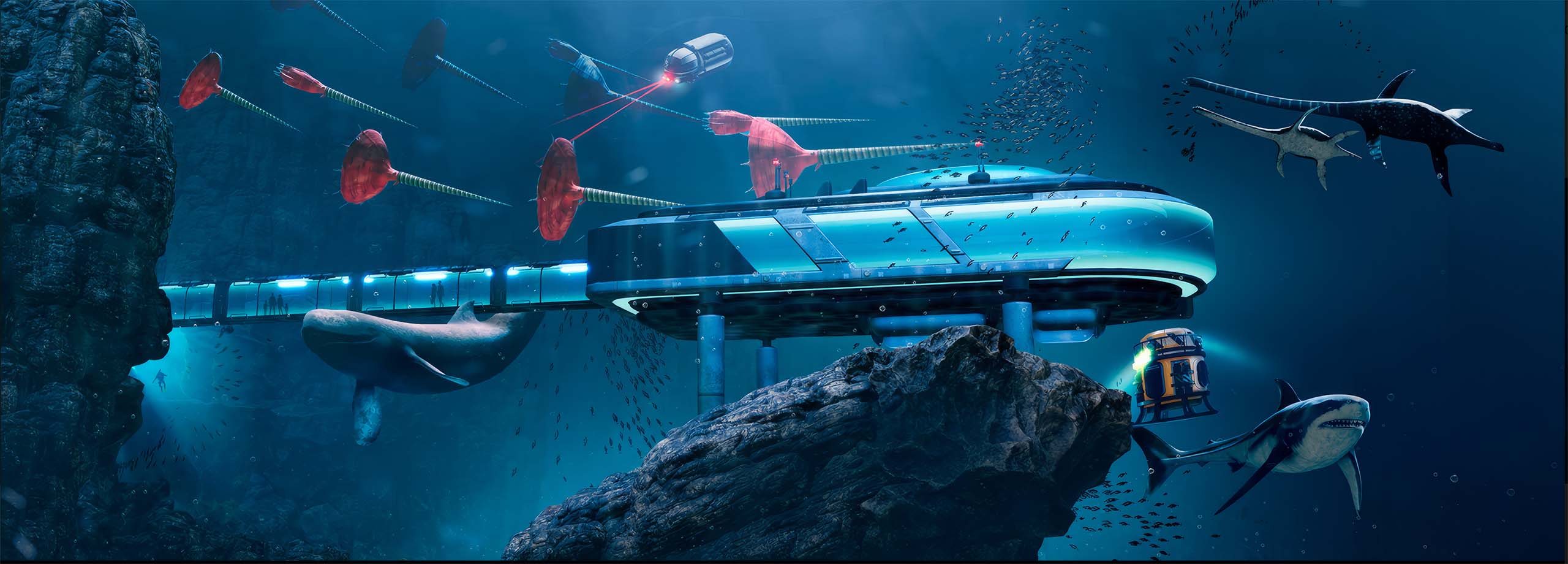
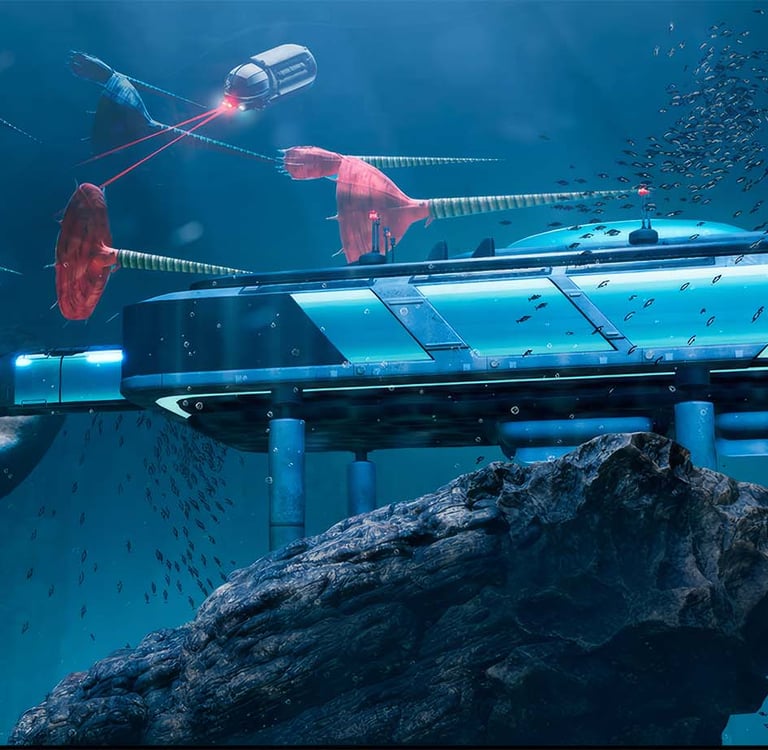
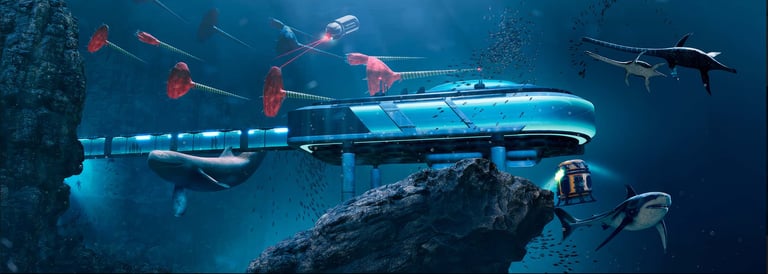
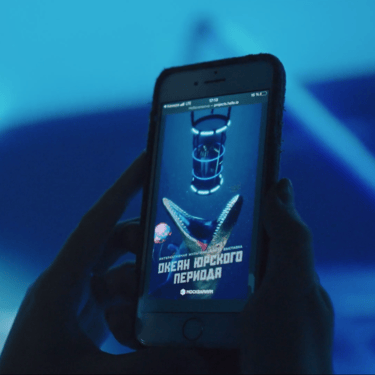
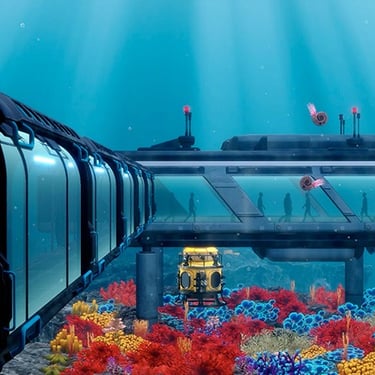
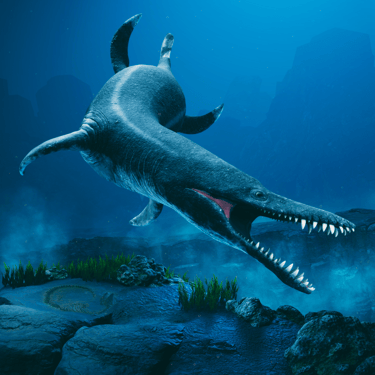
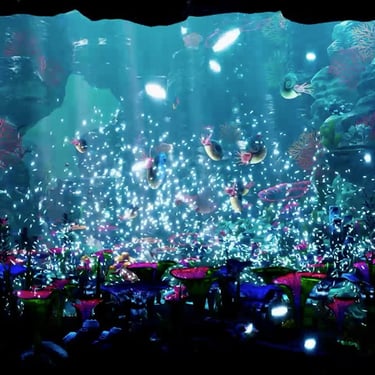
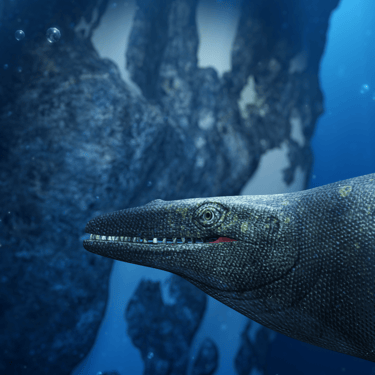
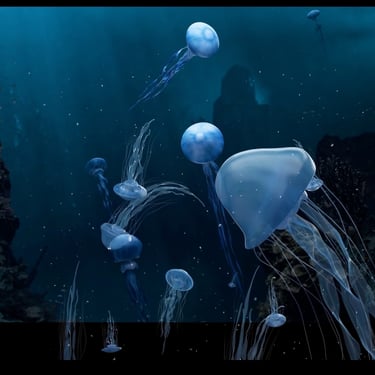
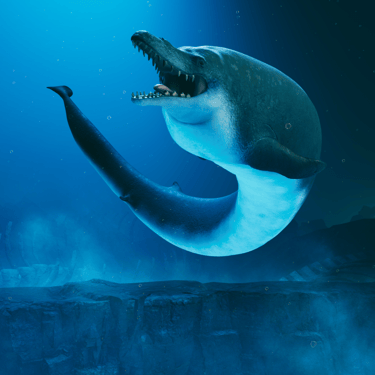
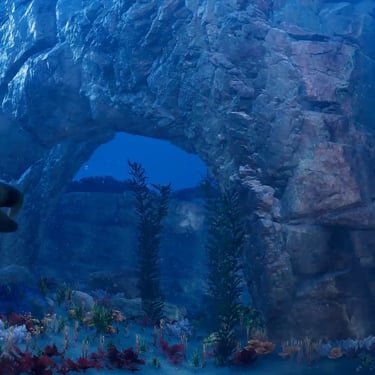
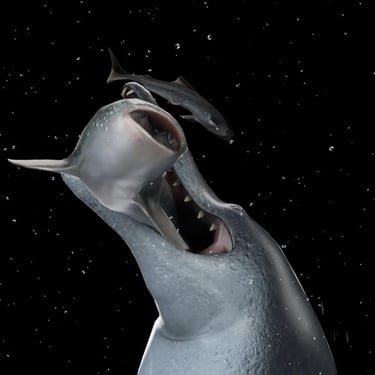
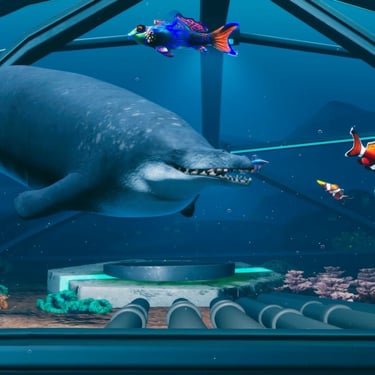
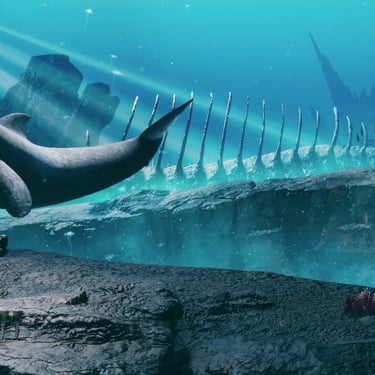
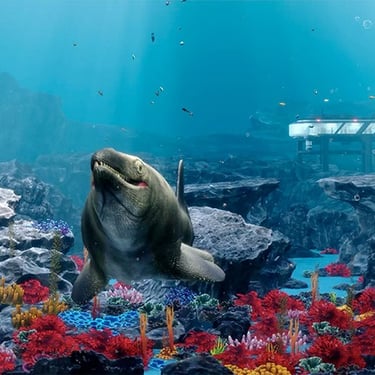
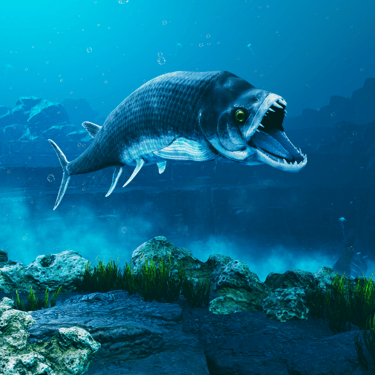
Jurassic Ocean invites visitors into an imagined underwater research base studying life in a prehistoric ocean. Through large projection “windows,” the experience reveals a continuous real-time world populated by ancient marine creatures—schools of early fish, unfamiliar invertebrates, and large predators such as mosasaurs and megalodon drifting through layered depth, where their silhouettes emerging and fading in distant fog.
From the descent corridor to the observation decks, interactive laboratory, bathyscaphe journey, and greenhouse, the park is structured as one coherent environment with shifting tone and scale. I defined the structure of this world and built the prototype that established its look, behavior patterns, and the rhythm of how it reveals itself to the visitor.
PROJECT SPECS
Type: Immersive multi-room interactive park (projection-based, real-time Unity scenes)
Client: Moskvarium — Russia’s largest oceanarium
Engine: Unity (real-time, multi-camera projection system)
Format: Narrative walk-through environment with interactive stations, show zones, and simulation-driven fauna
My Role: Art Director — worldbuilding, narrative structure, spatial design, real-time environment prototyping, visual systems
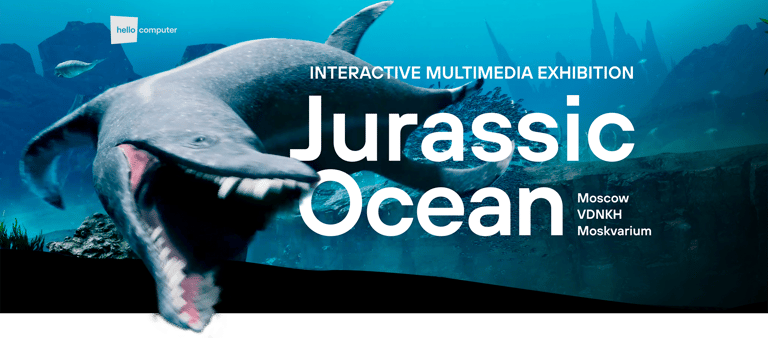
Jurassic Ocean invites visitors into an imagined underwater research base studying life in a prehistoric ocean. Through large projection “windows,” the experience reveals a continuous real-time world populated by ancient marine creatures—schools of early fish, unfamiliar invertebrates, and large predators such as mosasaurs and megalodon drifting through layered depth, where their silhouettes emerging and fading in distant fog.
From the descent corridor to the observation decks, interactive laboratory, bathyscaphe journey, and greenhouse, the park is structured as one coherent environment with shifting tone and scale. I defined the structure of this world and built the prototype that established its look, behavior patterns, and the rhythm of how it reveals itself to the visitor.
PROJECT SPECS
Type: Immersive multi-room interactive park (projection-based, real-time Unity scenes)
Client: Moskvarium — Russia’s largest oceanarium
Engine: Unity (real-time, multi-camera projection system)
Format: Narrative walk-through environment with interactive stations, show zones, and simulation-driven fauna
My Role: Art Director — worldbuilding, narrative structure, spatial design, real-time environment prototyping, visual systems
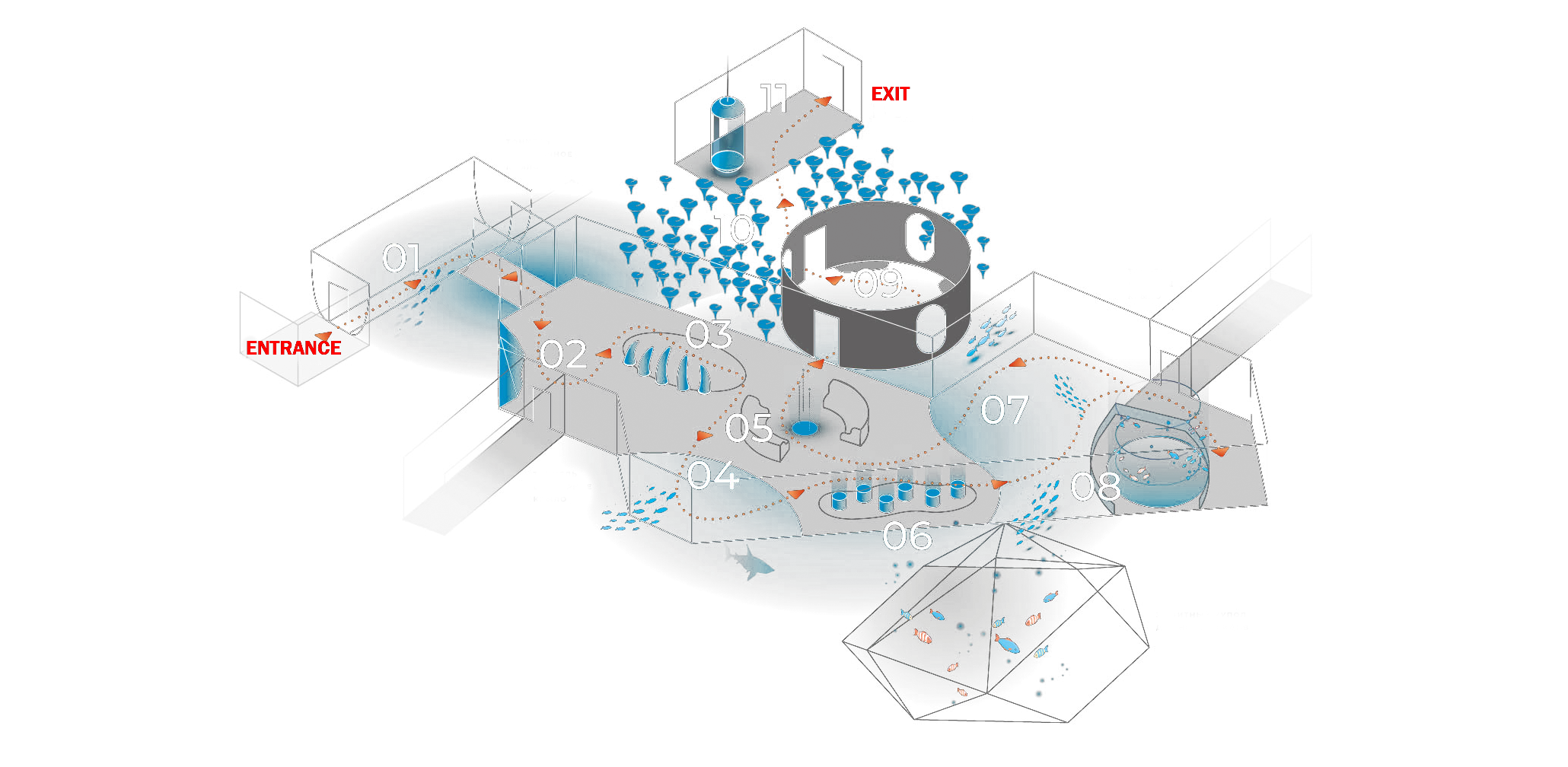
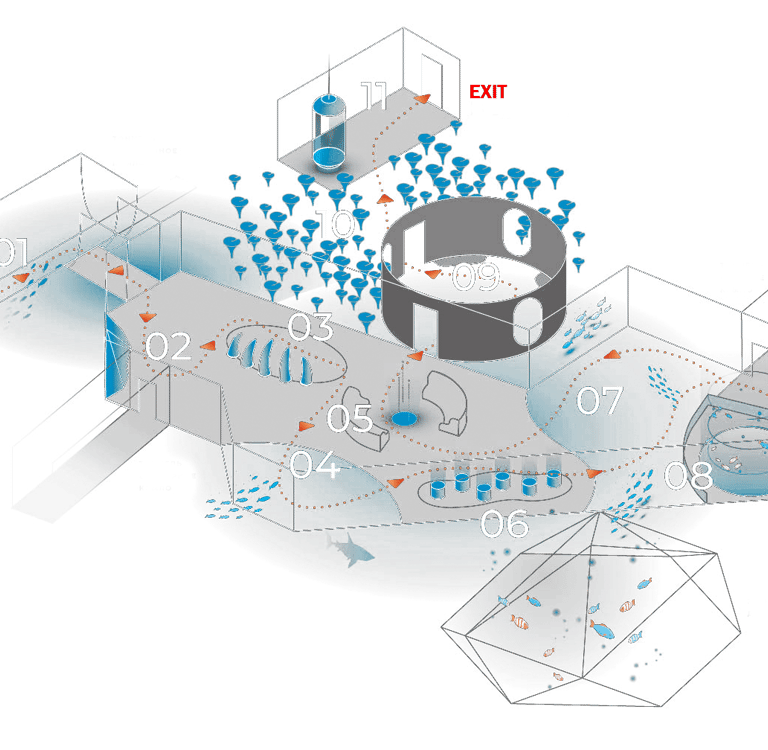
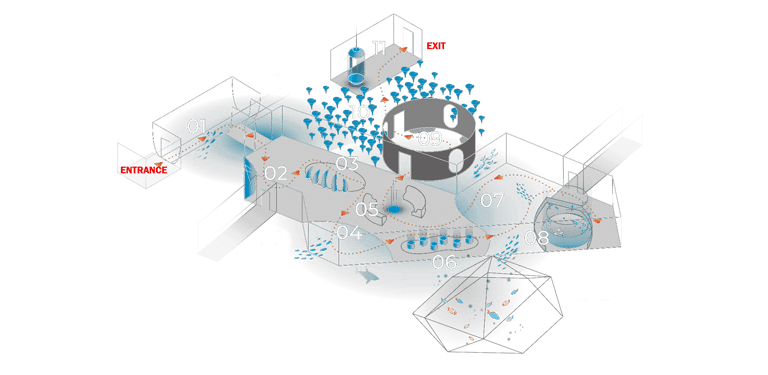
As visitors advance through the base, each room reveals a different angle on the shared prehistoric ocean. Evolution and Paleontology establish context and scale, while Balcony and Laguna introduce tension and spectacle—large silhouettes moving through fog, schools reacting to presence, and predators appearing from deeper layers. These early zones frame the environment as something alive and reactive, not just a backdrop, and set the pacing for how the world unfolds.
EXHIBITION LAYOUT AND FLOW
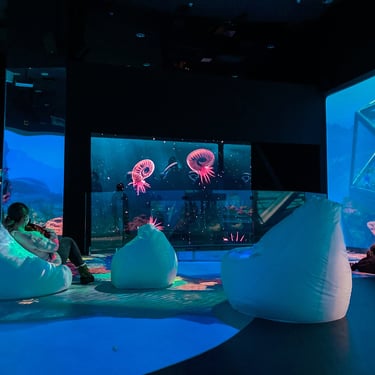
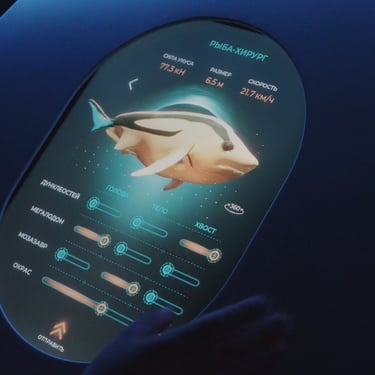
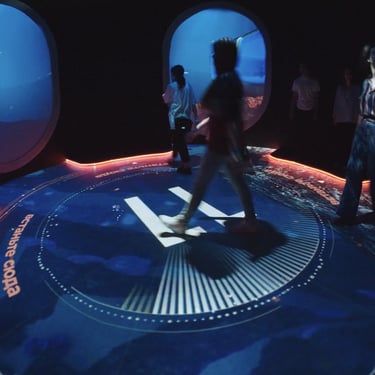
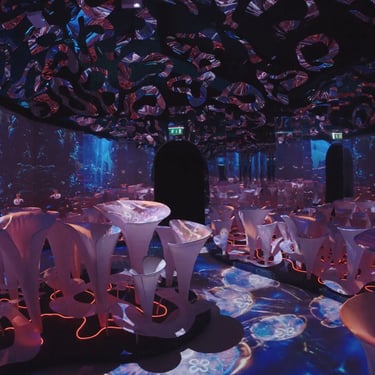
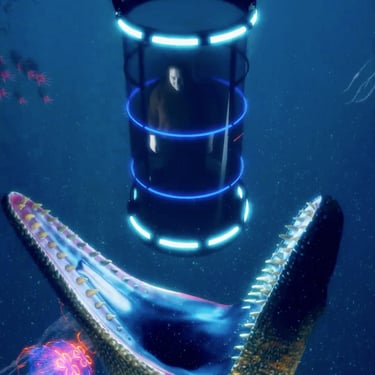
Further inside, the experience becomes more hands-on. The Lounge offers a slower observational rhythm, the Laboratory places visitors in the role of researchers modifying creature traits, and the Bathyscaphe reframes the world entirely, turning the canyon into a moving landscape on the way to the greenhouse sector. Though different in tone and interaction, each installation acts as a window into the same ecosystem, maintaining consistency in lighting, behavior, and a sense of place.
EXHIBITION GALLERY


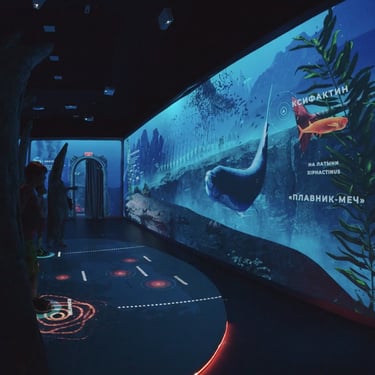
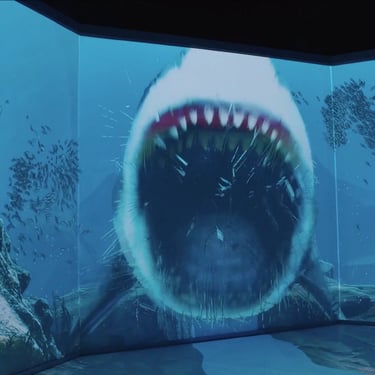
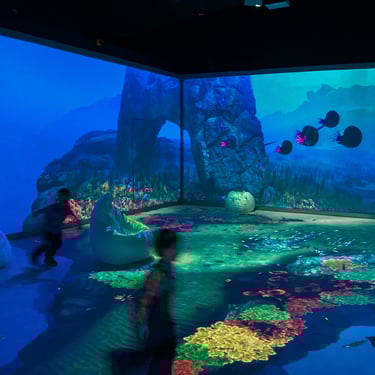
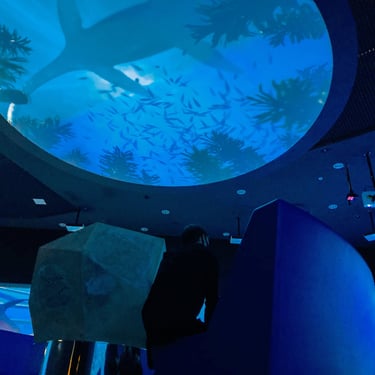
As visitors advance through the base, each room reveals a different angle on the shared prehistoric ocean. Evolution and Paleontology establish context and scale, while Balcony and Laguna introduce tension and spectacle—large silhouettes moving through fog, schools reacting to presence, and predators appearing from deeper layers. These early zones frame the environment as something alive and reactive, not just a backdrop, and set the pacing for how the world unfolds.
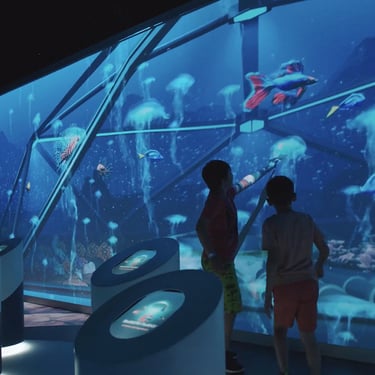
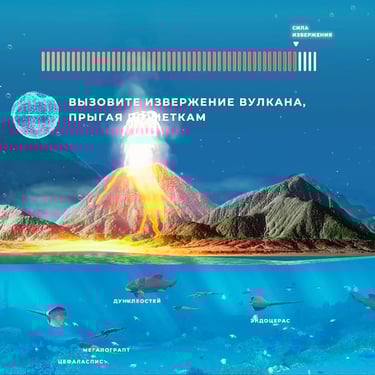
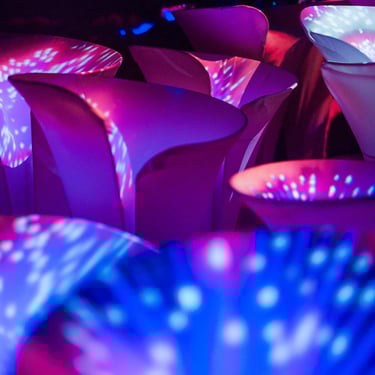
Further inside, the experience becomes more hands-on. The Lounge offers a slower observational rhythm, the Laboratory places visitors in the role of researchers modifying creature traits, and the Bathyscaphe reframes the world entirely, turning the canyon into a moving landscape on the way to the greenhouse sector. Though different in tone and interaction, each installation acts as a window into the same ecosystem, maintaining consistency in lighting, behavior, and a sense of place.
EXHIBITION LAYOUT AND FLOW
EXHIBITION GALLERY
CONTRIBUTION AND KEY DECISIONS
Reframing the park into one world
Initially every installation was imagined as its own scene with a definitive style. My first core decision was to unite it into the one shared world with a thorough narrative. There is how the story of the underwater research base was born, and every window in it pointed in the direction of the same space. This decision established coherence, solved scale inconsistencies, and allowed the visitors’ journey to feel intentional.
Building the environment prototype in Unity
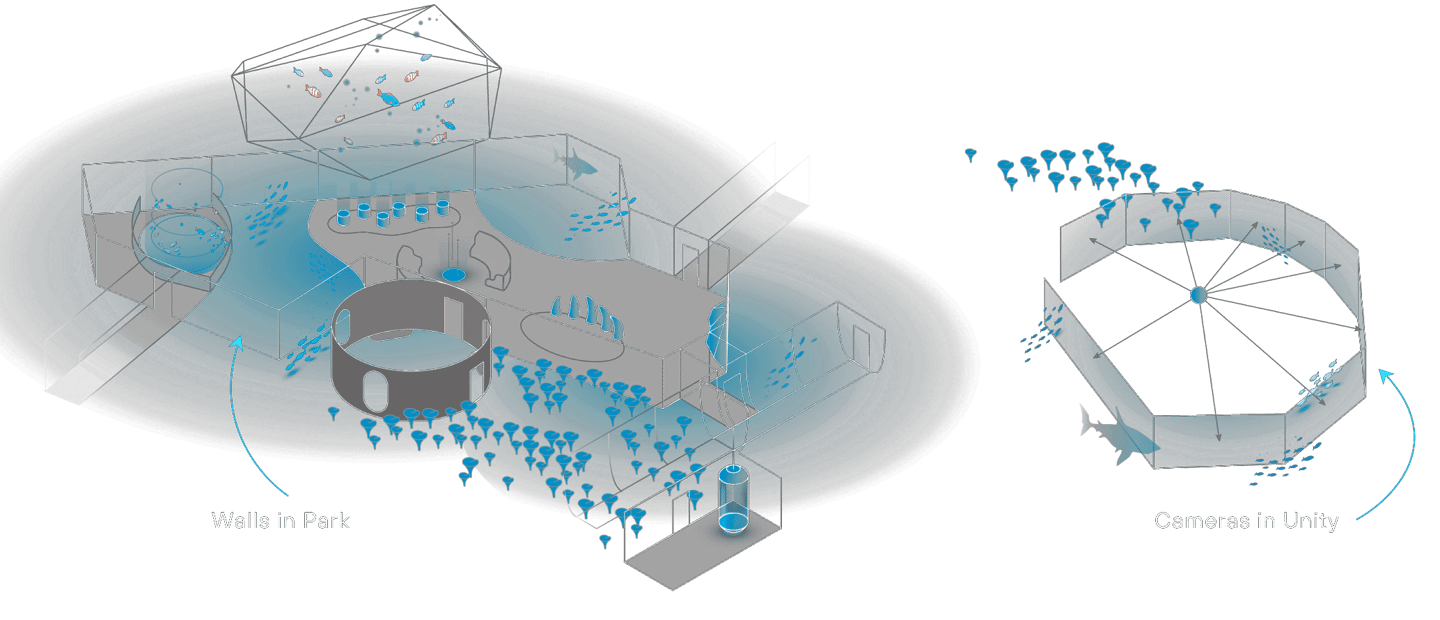
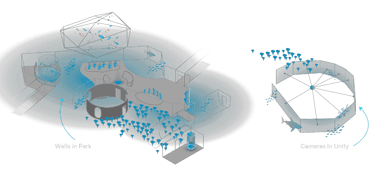
To move the project from idea to something tangible, I built the entire environment as a functional Unity scene early on. Open water, research base, creature patrool routes, lighting, camera views, color and mood—all as a single ecosystem. This gave everyone a shared point of reference, that allowed us to see immediately how the space feels when you move through it. The prototype became the baseline for all later decisions.
Defining behavior systems
I shaped how the ocean behaves by combining simple systemic rules with a few timed show moments where it made sense. Schooling fish relied on steering and avoidance logic, and larger animals followed broad patrol routes that let them drift in and out naturally. Some installations had staging elements for the suspense, like megalodon reacting to visitors on the balcony. The balance of systems and scripting kept the world plausible while still supporting the moments that needed a bit more tension.
Establishing the narrative flow of the journey
With the world taking form, I defined how visitors should experience it. The descent corridor sets the tone, the main station introduces scale and activity, and the canyon-facing rooms build natural tension. Calmer zones give space to breathe, and the bathyscaphe reframes the ocean as a moving landscape leading toward the greenhouse sector. The pacing comes from the structure of the world itself, allowing each room to expand on the same environment from a new angle.
Setting visual language
I established lighting and color logic for the entire base, shaping how depth, temperature, and brightness shift across zones. Suspense-heavy areas leaned into colder tones and sharper silhouettes, while rest zones used warmer light and slower movement. Each installation had its own composition and visual “accent,” but remained anchored in the same world rules. This helped the park maintain coherence while still giving each room its own identity.
Day-to-day production and aligning the vision
I directed ongoing visual decisions, clarified environmental logic, and supported the creation of individual installations. The prototype served as shared ground for discussing scale, motion, and lighting, and I expanded it as needed to help solve practical problems. Documentation was kept clear and concise, focusing on the world’s rules rather than abstract descriptions. This kept the project aligned as it evolved and made it easier for the team to work within one coherent vision.
CONTENT GALLERY
CONTRIBUTION AND KEY DECISIONS
Reframing the park into one world
Initially every installation was imagined as its own scene with a definitive style. My first core decision was to unite it into the one shared world with a thorough narrative. There is how the story of the underwater research base was born, and every window in it pointed in the direction of the same space. This decision established coherence, solved scale inconsistencies, and allowed the visitors’ journey to feel intentional.
Building the environment prototype in Unity
To move the project from idea to something tangible, I built the entire environment as a functional Unity scene early on. Open water, research base, creature patrool routes, lighting, camera views, color and mood—all as a single ecosystem. This gave everyone a shared point of reference, that allowed us to see immediately how the space feels when you move through it. The prototype became the baseline for all later decisions.
Defining behavior systems
I shaped how the ocean behaves by combining simple systemic rules with a few timed show moments where it made sense. Schooling fish relied on steering and avoidance logic, and larger animals followed broad patrol routes that let them drift in and out naturally. Some installations had staging elements for the suspense, like megalodon reacting to visitors on the balcony. The balance of systems and scripting kept the world plausible while still supporting the moments that needed a bit more tension.
Establishing the narrative flow of the journey
With the world taking form, I defined how visitors should experience it. The descent corridor sets the tone, the main station introduces scale and activity, and the canyon-facing rooms build natural tension. Calmer zones give space to breathe, and the bathyscaphe reframes the ocean as a moving landscape leading toward the greenhouse sector. The pacing comes from the structure of the world itself, allowing each room to expand on the same environment from a new angle.
Setting visual language
I established lighting and color logic for the entire base, shaping how depth, temperature, and brightness shift across zones. Suspense-heavy areas leaned into colder tones and sharper silhouettes, while rest zones used warmer light and slower movement. Each installation had its own composition and visual “accent,” but remained anchored in the same world rules. This helped the park maintain coherence while still giving each room its own identity.
Day-to-day production and aligning the vision
I directed ongoing visual decisions, clarified environmental logic, and supported the creation of individual installations. The prototype served as shared ground for discussing scale, motion, and lighting, and I expanded it as needed to help solve practical problems. Documentation was kept clear and concise, focusing on the world’s rules rather than abstract descriptions. This kept the project aligned as it evolved and made it easier for the team to work within one coherent vision.
CONTENT GALLERY