
Hello Japan
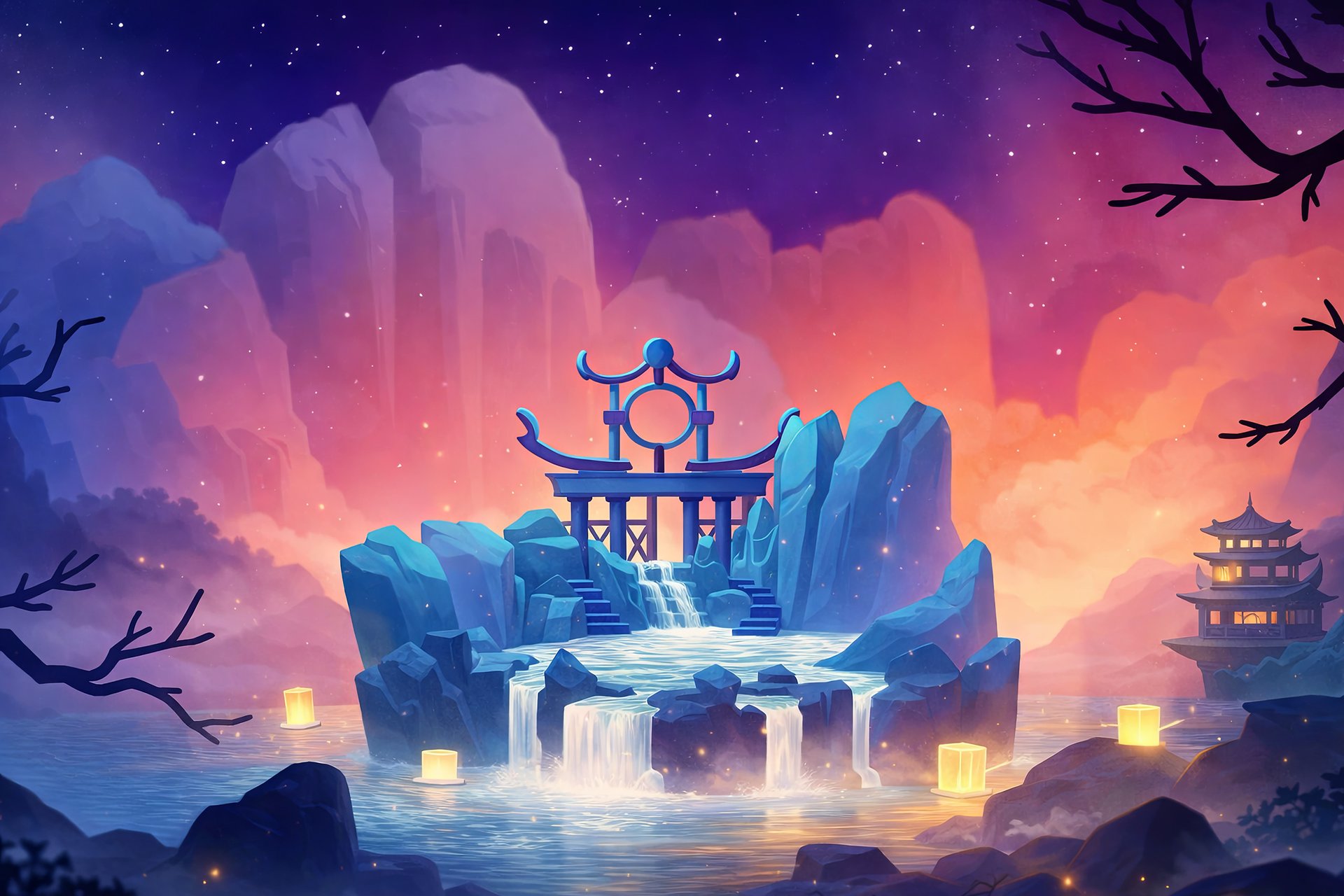


Phygital interactive park inspired by Japanese mythology and pop culture
Role: Lead CG Artist
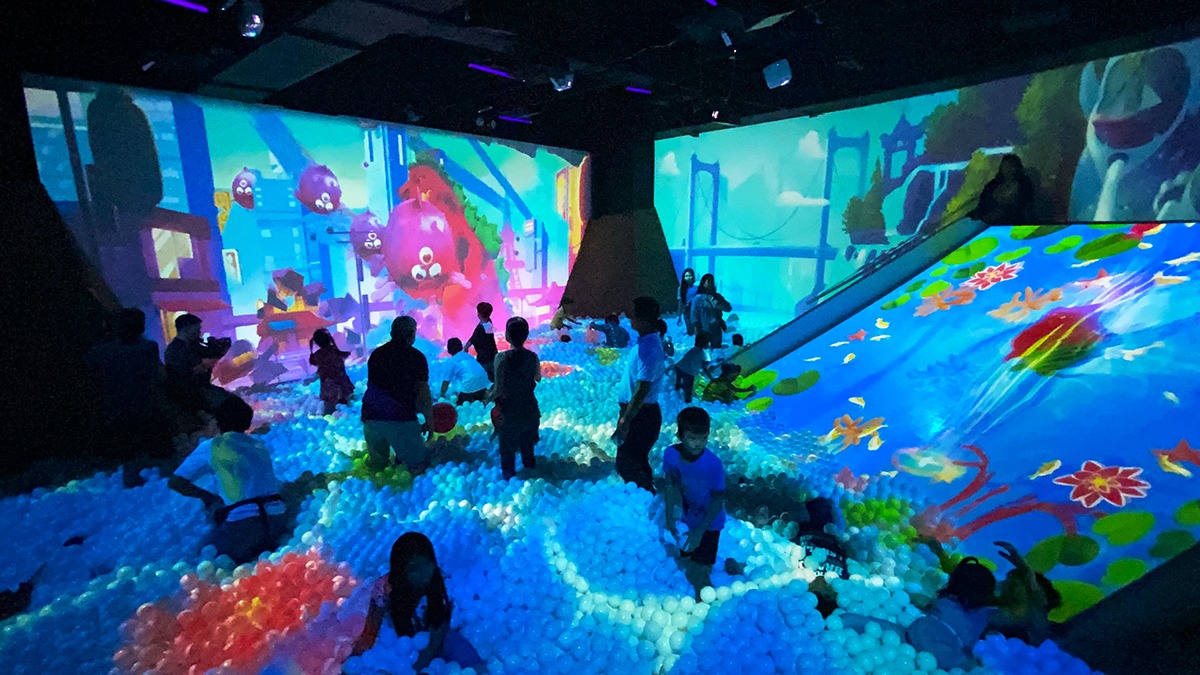
Hello Japan is an open phygital interactive park for children and parents, developed at Hello.io and first launched in Manila. The space covers roughly 500 square meters and consists of twelve independent interactive attractions built with real-time Unity based projection games, physical interaction, and custom hardware setups. The park has no fixed route or narrative progression, allowing visitors to move freely between zones and engage with experiences at their own pace.
I joined the project at an early stage as Lead CG Artist, contributing to the formation of the visual concept and later leading art production. My work focused on defining the park’s visual language, aligning a multidisciplinary art team around shared design principles, and personally developing two of the largest installations end-to-end in Unity. Visual coherence across the space was achieved through a shared visual system rather than spatial sequencing or narrative structure.
OVerview
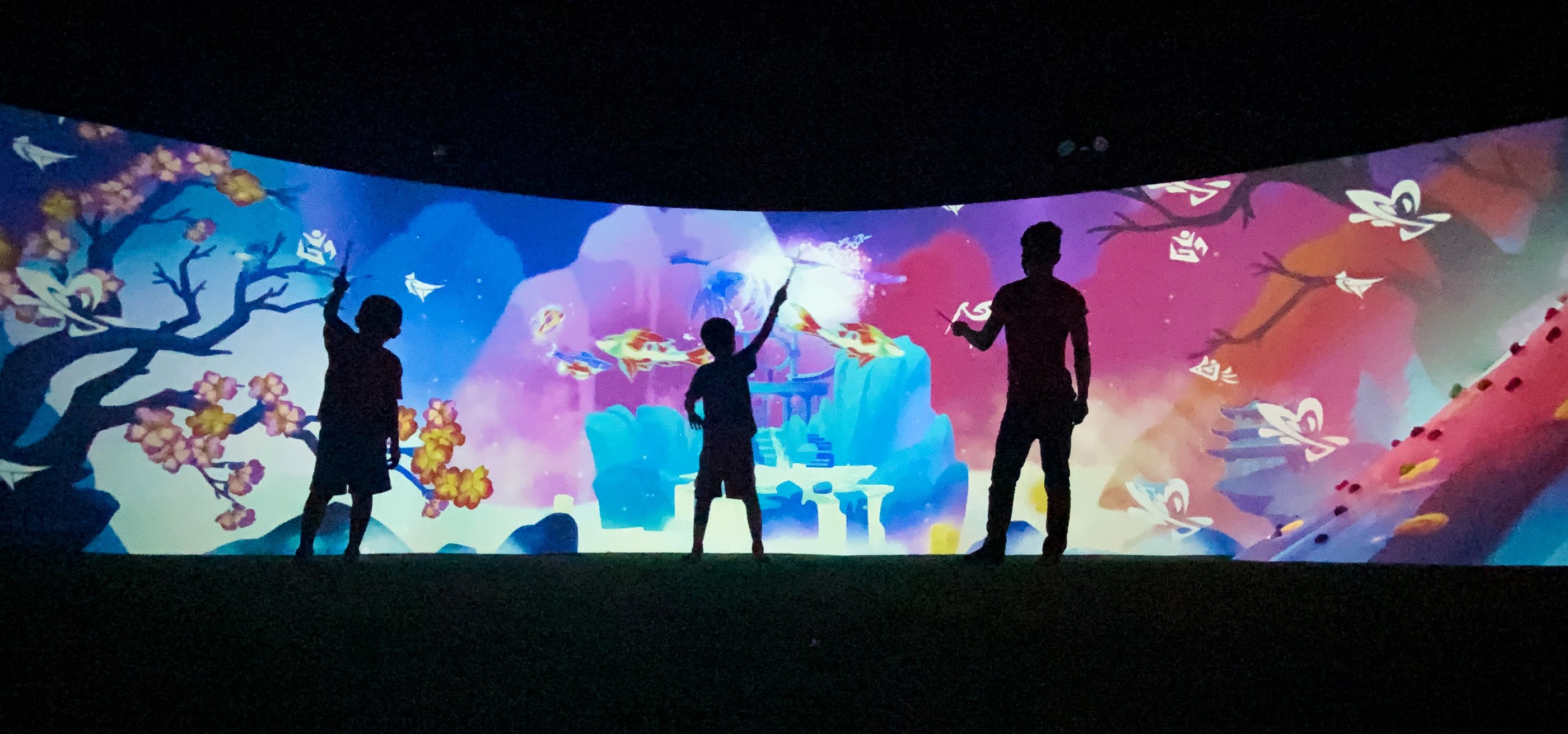
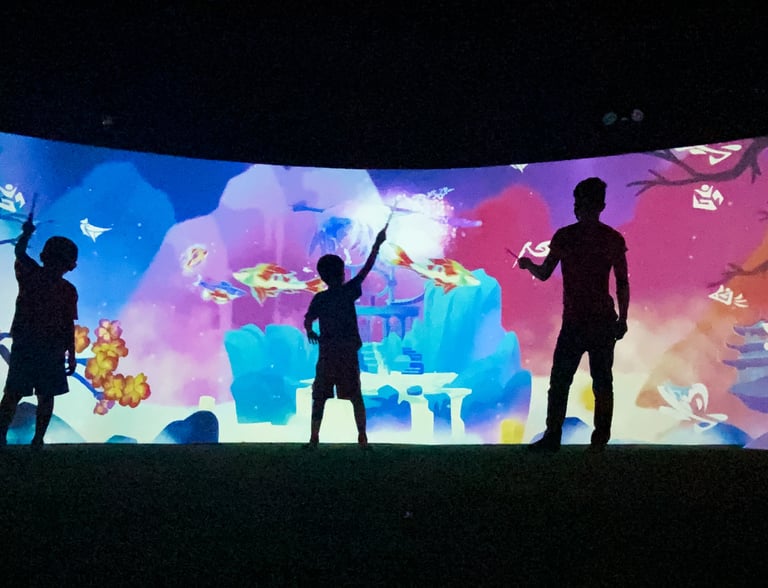
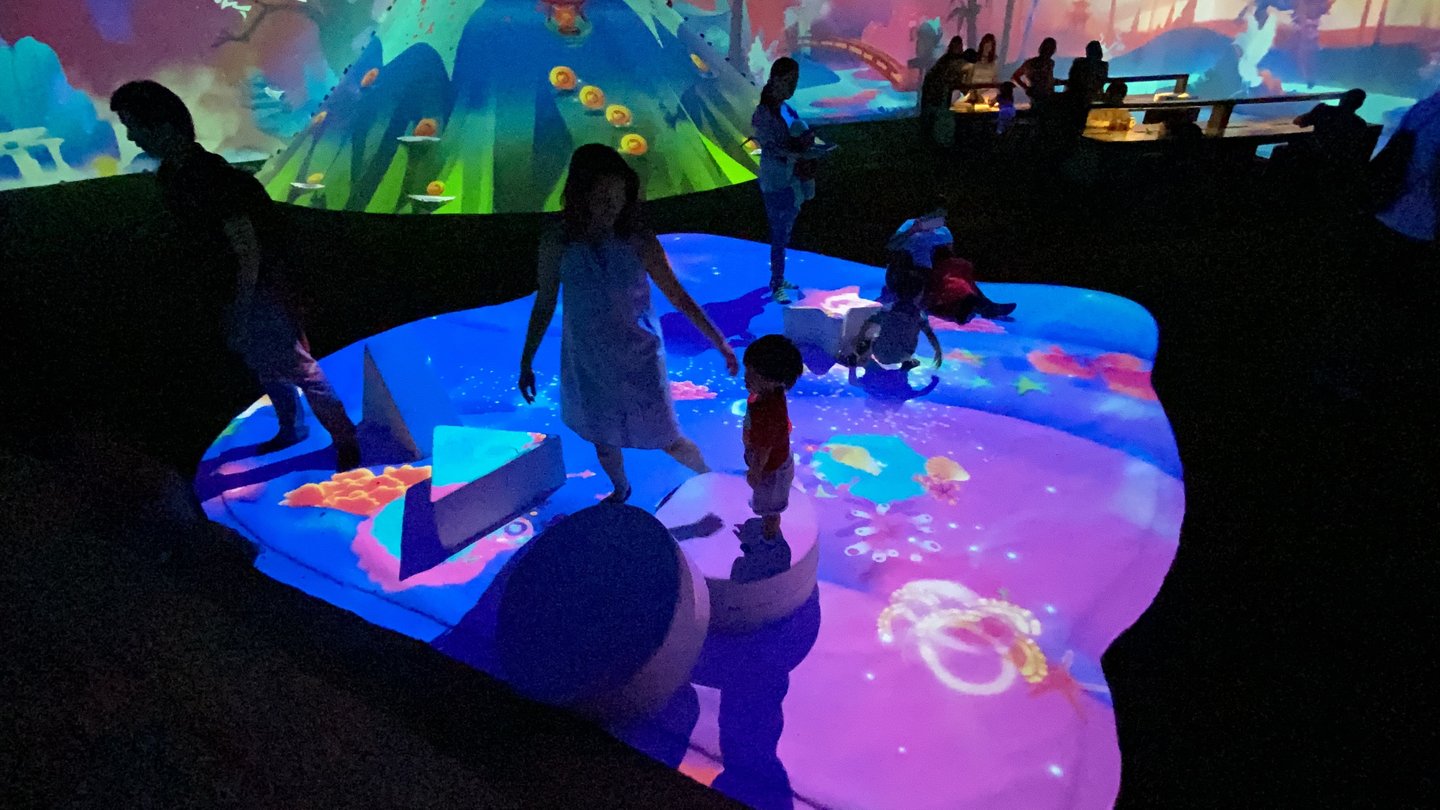
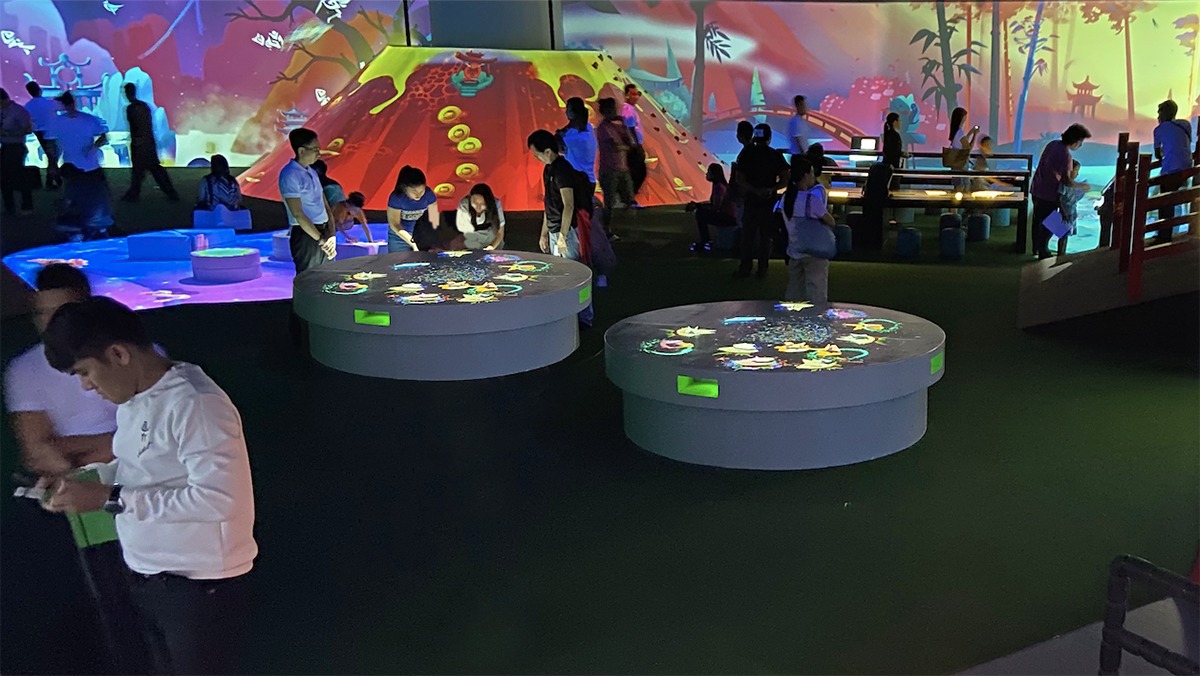
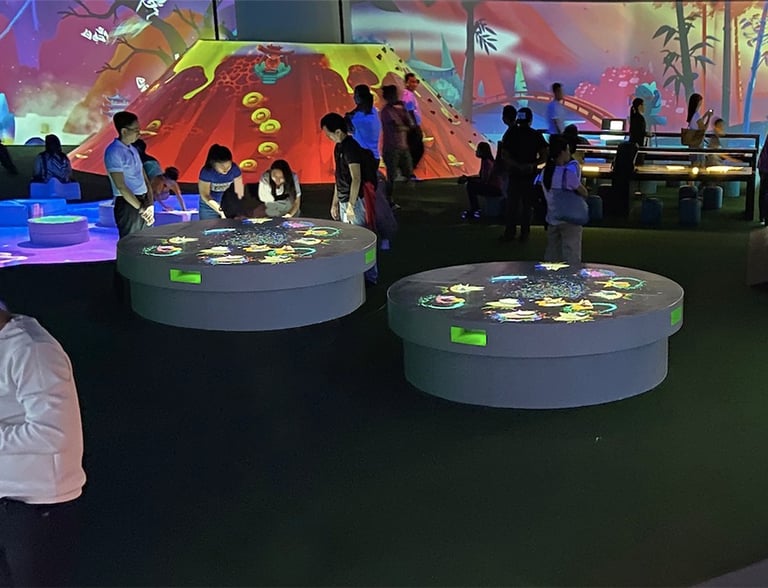
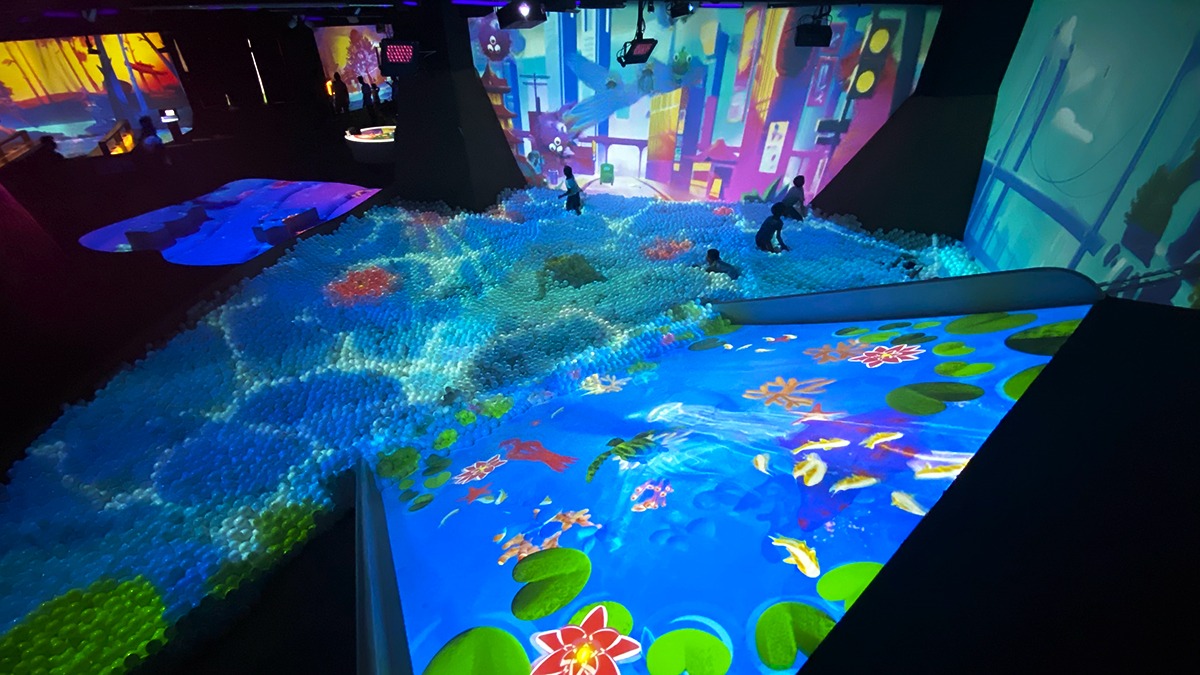
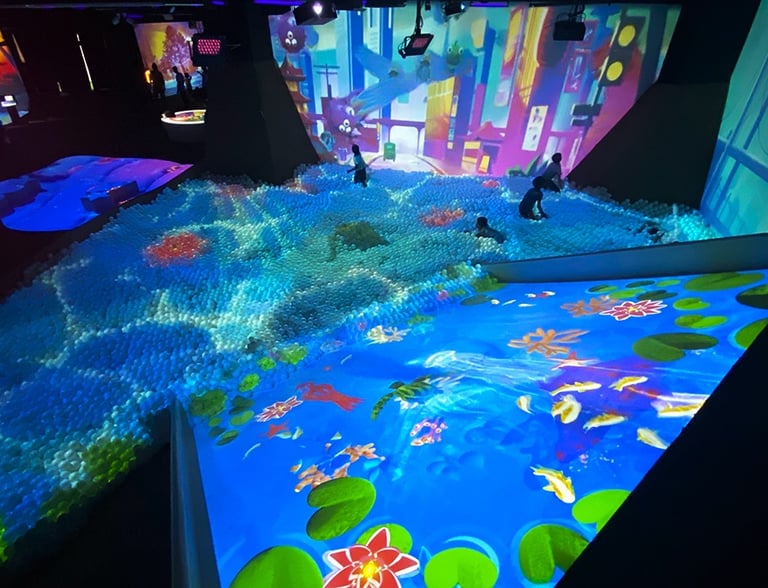
Hello Japan is experienced as a single open environment composed of interactive surfaces embedded into architecture, including walls, floors, curved projections, tables, slides, trampolines, and physical props. Visitors engage through a wide range of physical actions such as throwing, jumping, sliding, drawing, coloring, and crafting, with each attraction designed to support short, repeatable interaction loops.
Each attraction operates as an independent real-time scene on dedicated hardware, yet all are visually connected through consistent use of color logic, abstraction level, lighting behavior, and compositional clarity. Periodic synchronized events, such as a dragon flying across multiple projections, reinforce the sense of a shared world while preserving the autonomy of each installation. The overall experience balances accessibility for children with visual depth that remains engaging for accompanying adults.
INTEractive Zones
INTEractive Zones
key decisions & Contribution
Shaping cultural inspiration into authored visuals
I guided the project away from direct anime aesthetics toward a more interpretive visual approach inspired by Japanese mythology, folklore, and graphic traditions. References emphasized rhythm, simplified forms, and expressive composition, allowing the park to feel culturally grounded while maintaining a distinctive identity.
Establishing a shared visual language for attractions
With no narrative path or spatial hierarchy to unify the park, I defined a visual language based on abstraction, silhouette clarity, controlled color palettes, and negative space. These principles provided a stable foundation that could scale across twelve attractions built with different techniques, interaction models, and artistic pipelines.
Coaching artists toward visual consistency
As visual differences emerged during early production, I worked closely with the team to review work in context, explain design principles, and adjust decisions at the system level. This approach helped converge style and quality while preserving the diversity of interactions across the park.
Balancing fidelity, performance, and interaction density
All scenes were designed to run at a stable 60 FPS on mid-range hardware, with projection resolutions ranging from HD to QHD and frequent projector overlap to reduce visitor shadows. Visual decisions prioritized clarity and responsiveness, ensuring that interaction feedback remained readable under real-world lighting and movement conditions.
Aligning heterogeneous pipelines through design rules
Each attraction required a different production approach—ranging from 2D-heavy interactive illustrations to 3D environments, particle-driven scenes, and game-like loops. Instead of enforcing a single pipeline, I aligned work through shared rules for color behavior, contrast, lighting, and spatial readability, allowing artists to work within their strengths without fragmenting the overall look.
Hands-on development of benchmark installations
I developed two major installations—Tokyo and Yamato-E—from assets and shaders to interaction logic and final optimization. These scenes acted as concrete benchmarks for quality, abstraction level, and performance, providing the team with reference implementations rather than abstract guidelines.
Promo

Or explore more of my work:
Or explore more of my work: