
Atom.Online



A large-scale, real-time virtual world designed for collaboration, events, and public engagement.
Role: Art Director, Art Lead, with hands-on contribution
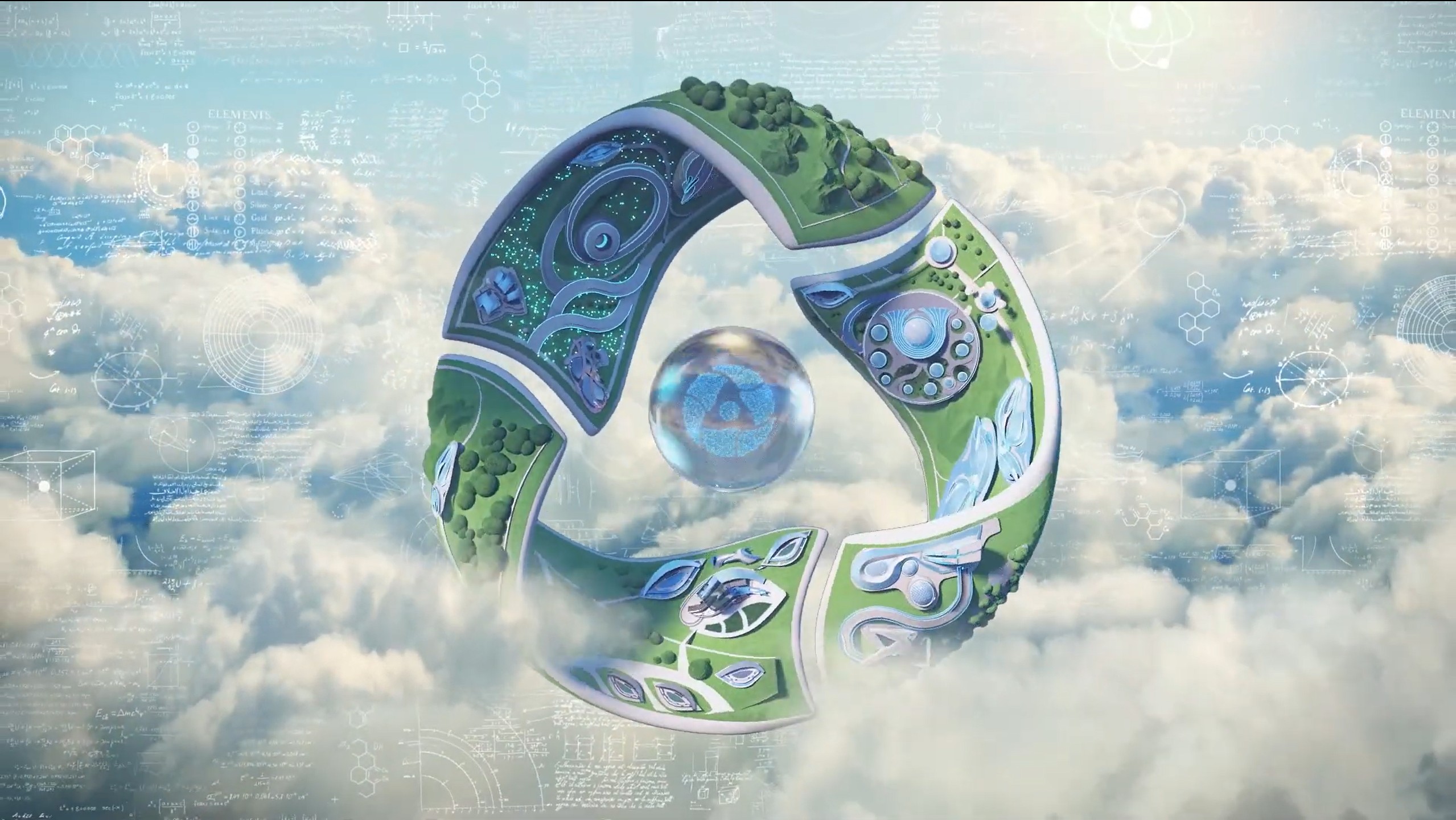
Atom.Online is a 3D, game-like virtual world developed for Rosatom during the period of widespread remote work. The platform was conceived as a shared digital environment that could support internal collaboration between employees, contractors, and distributed teams, while also functioning as a publicly accessible space for conferences, presentations, and large-scale company events.
The project was designed as a long-term platform rather than a one-off experience. It needed to accommodate daily work sessions, scheduled corporate events, and public-facing activities within a single coherent system. This imposed strong constraints on usability, performance, and visual restraint, as the platform had to remain accessible on standard office hardware and usable for both short visits and extended sessions.
OVerview
Atom.Online is experienced as a persistent open world navigated through a third-person avatar. Users move freely through large, readable environments, encounter other participants organically, and gather around shared points of interest. The world is calm and spacious by default, allowing casual exploration, informal interaction, and social presence without constant prompts or scripted behavior.
Each zone is structured around a central hub that concentrates activity and directs users toward specific actions. Functional spaces—such as conference halls, coworking rooms, or interactive exhibits—are accessed through these hubs and loaded as separate, purpose-built scenes. From the user’s perspective, this feels like moving naturally through a world that transitions smoothly into focused environments when needed, rather than navigating menus or disconnected levels.
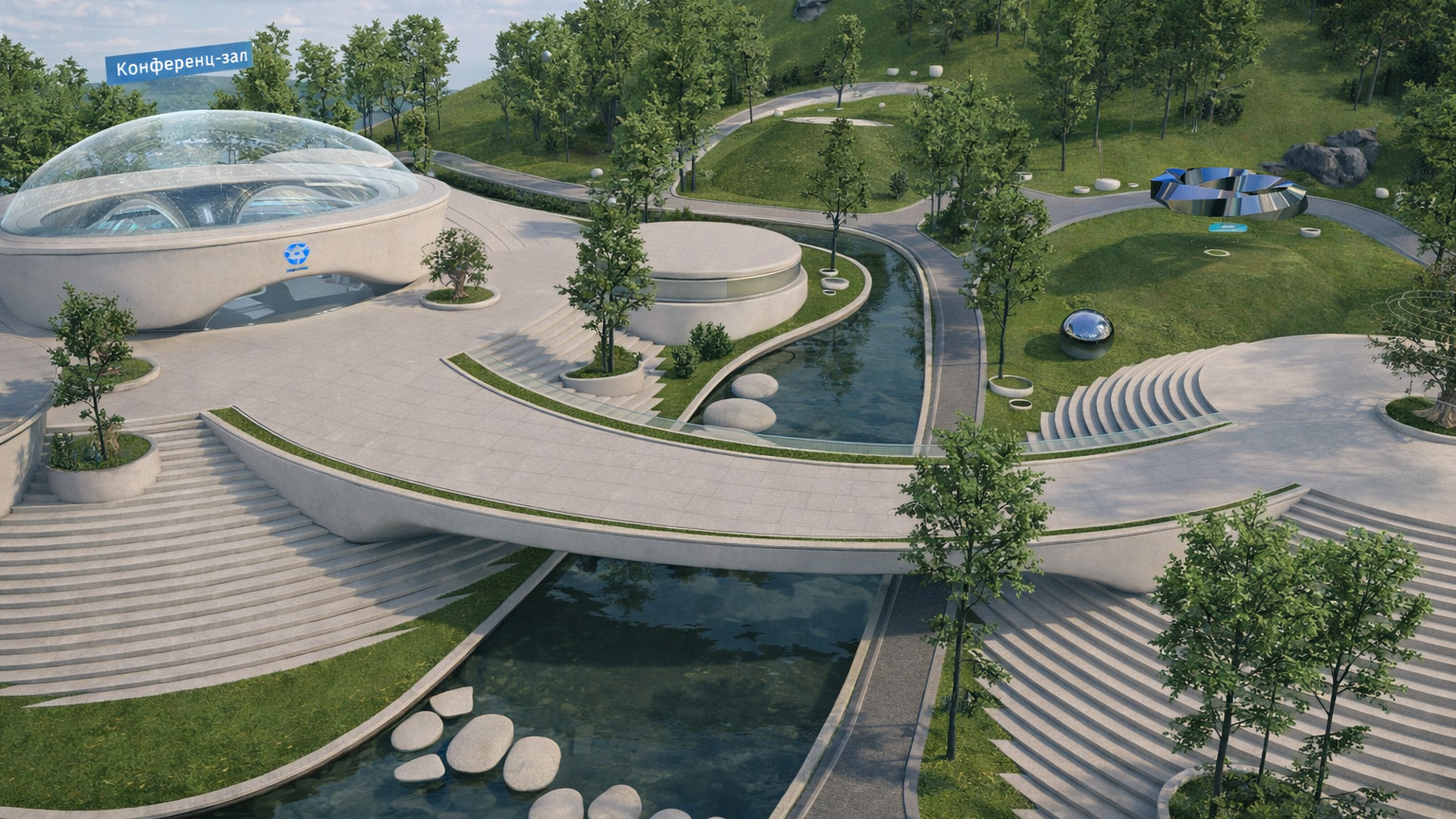
An open area and lobby environment designed for exploration and social gathering. During scheduled events, users are transitioned into a large virtual conference hall capable of hosting thousands of participants simultaneously. The hall is optimized for presentations, speeches, and announcements, with clear stage focus and audience readability at scale.
ConFERENCE Zone
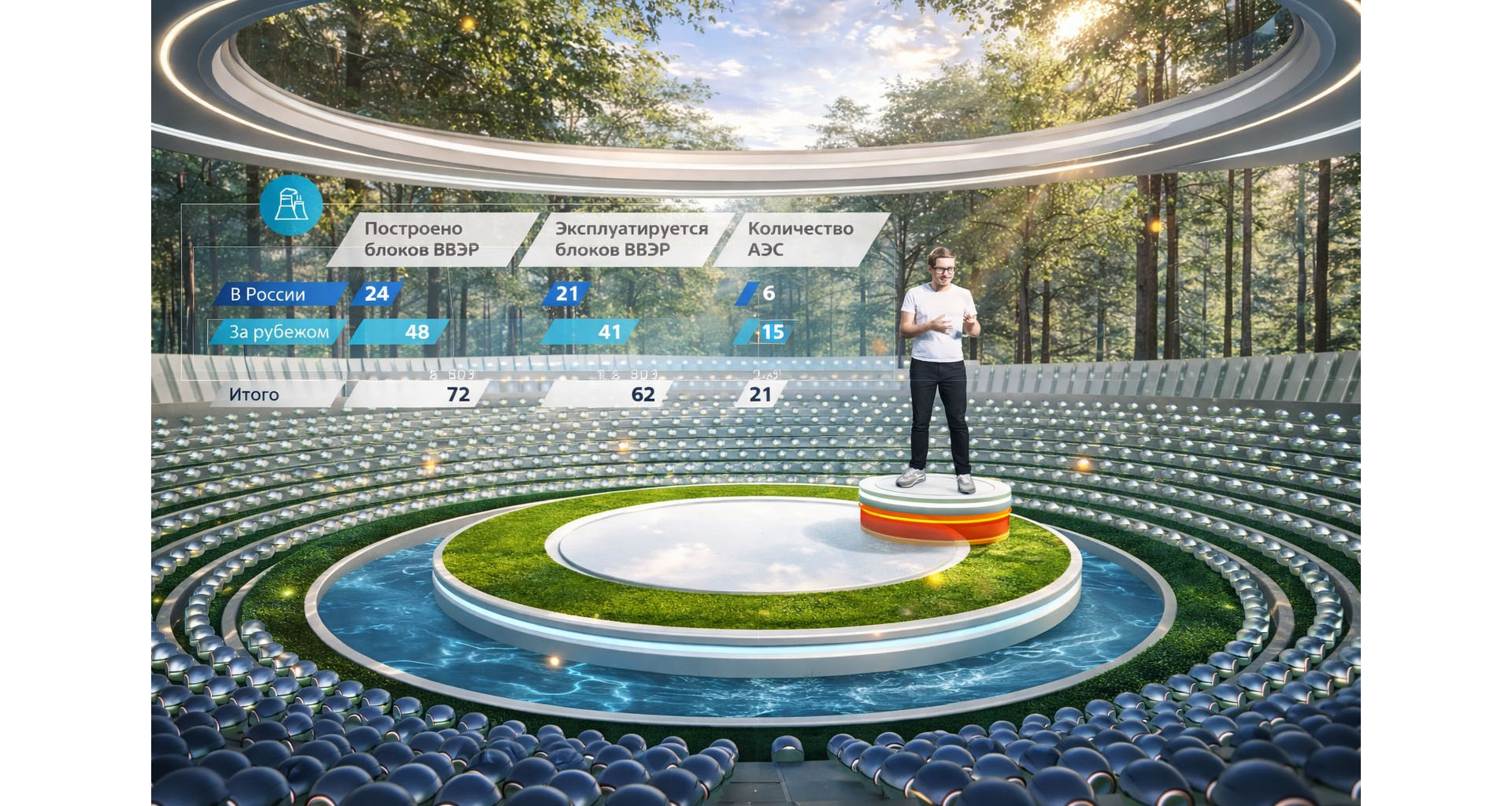
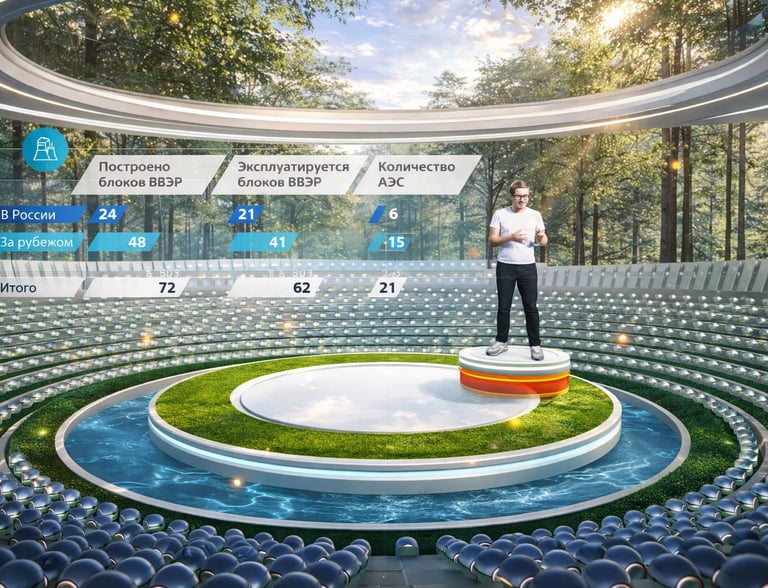
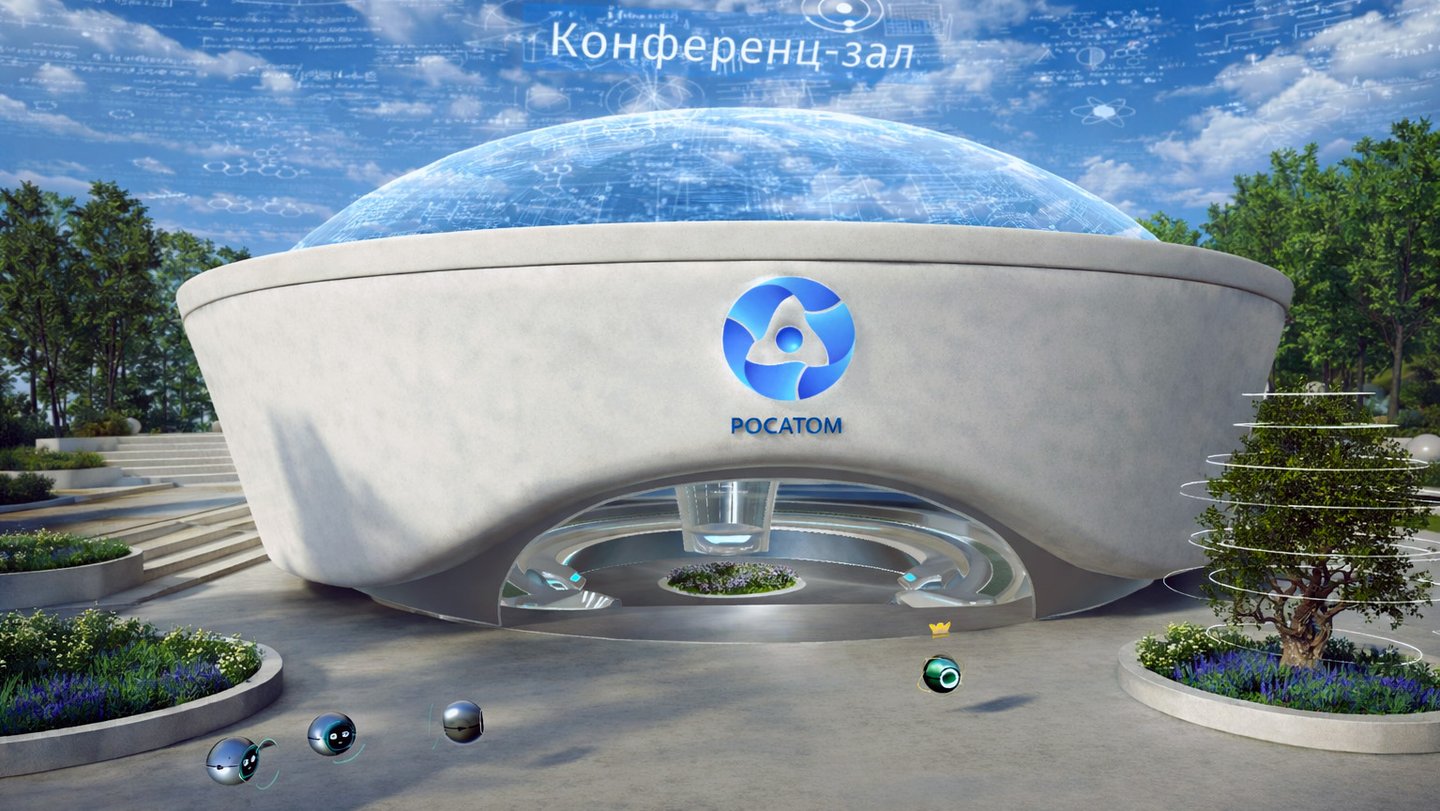
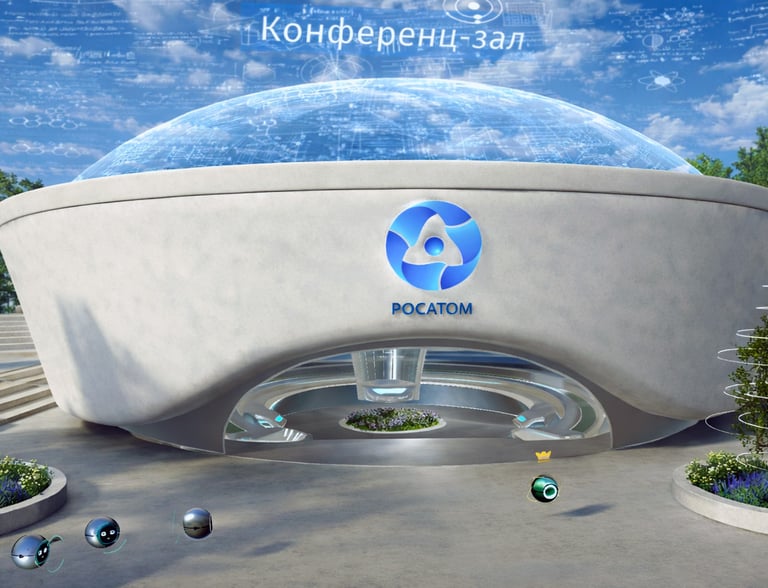
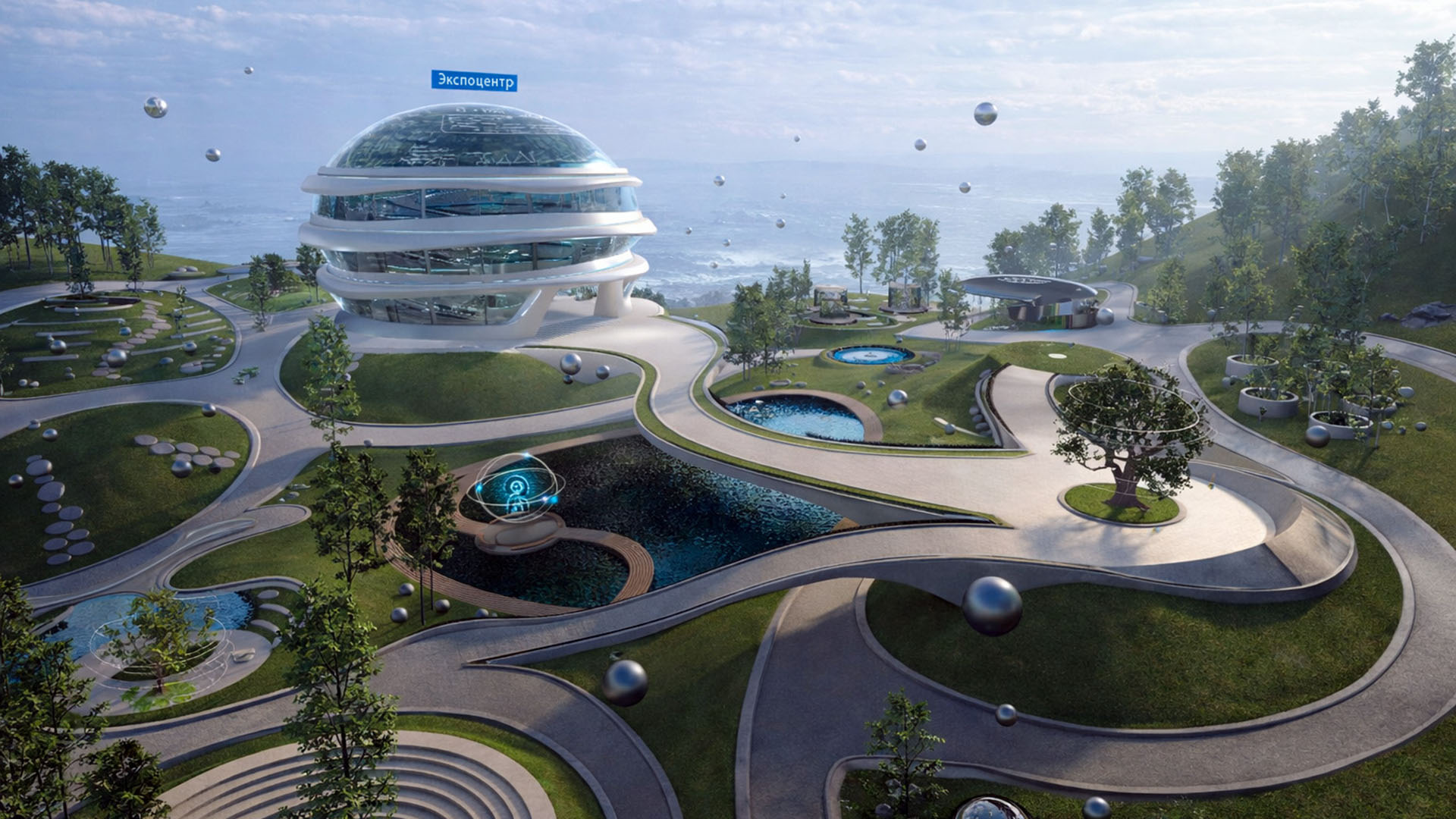
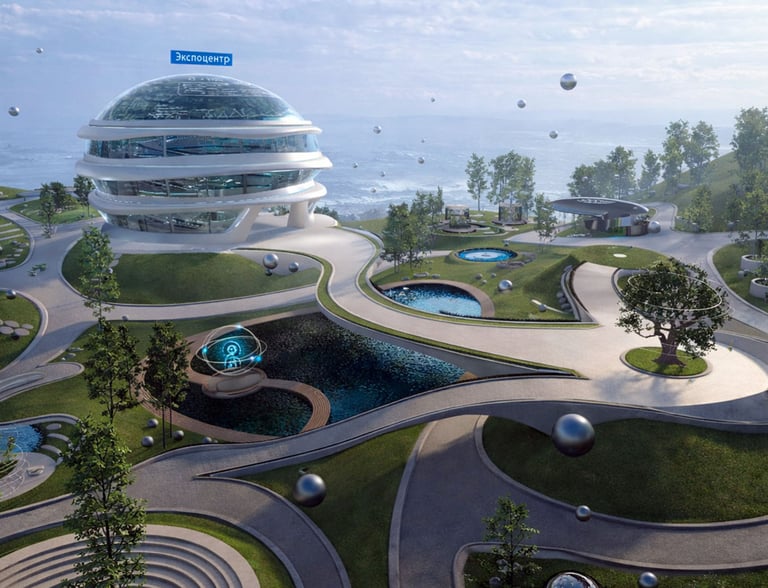
An explorable exhibition space centered around an expo building. Inside, users access portals leading to separate scenes that showcase the company’s work across different domains—energy, medicine, industry, and defense. Each exhibit functions as a self-contained experience while remaining logically connected to the shared world.
Expo Zone
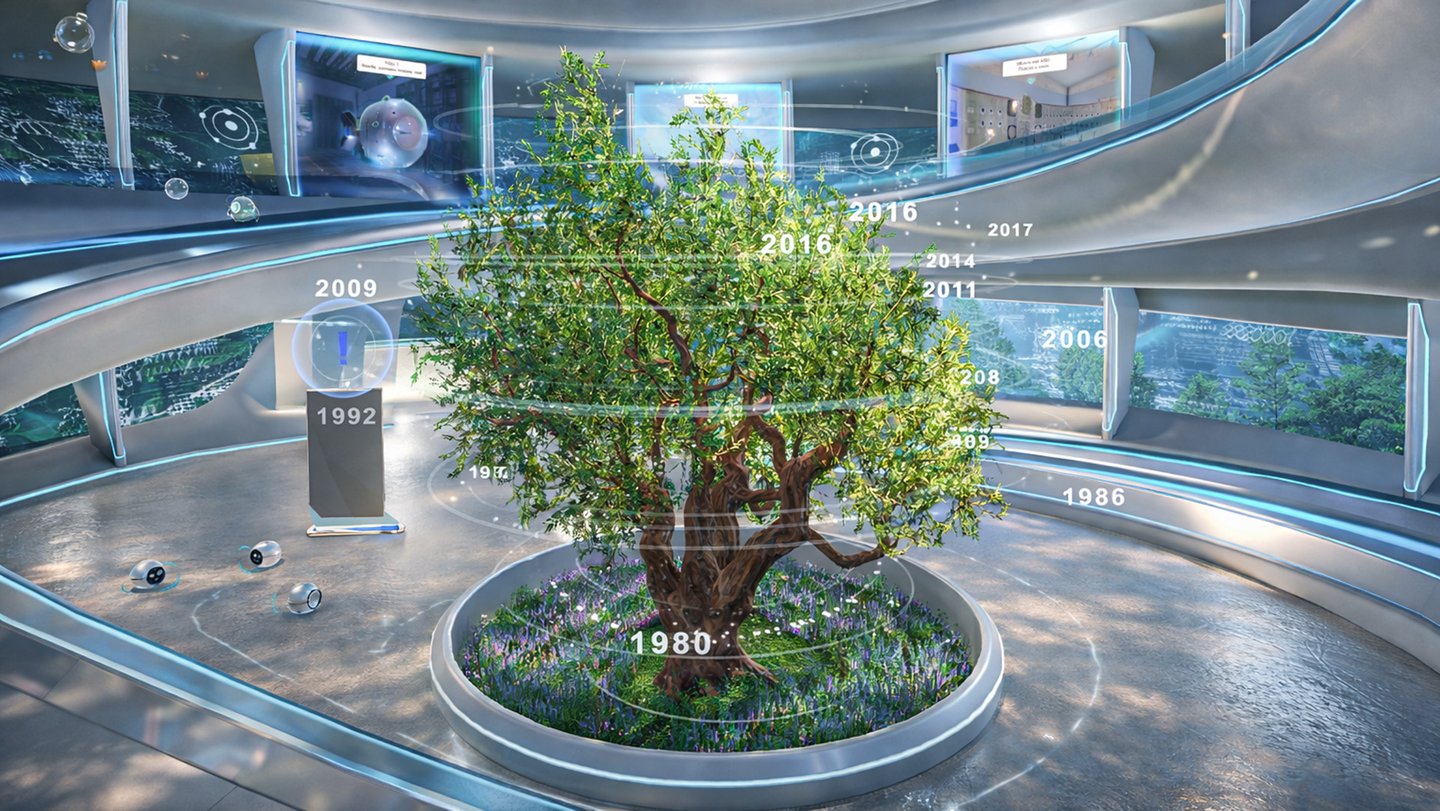
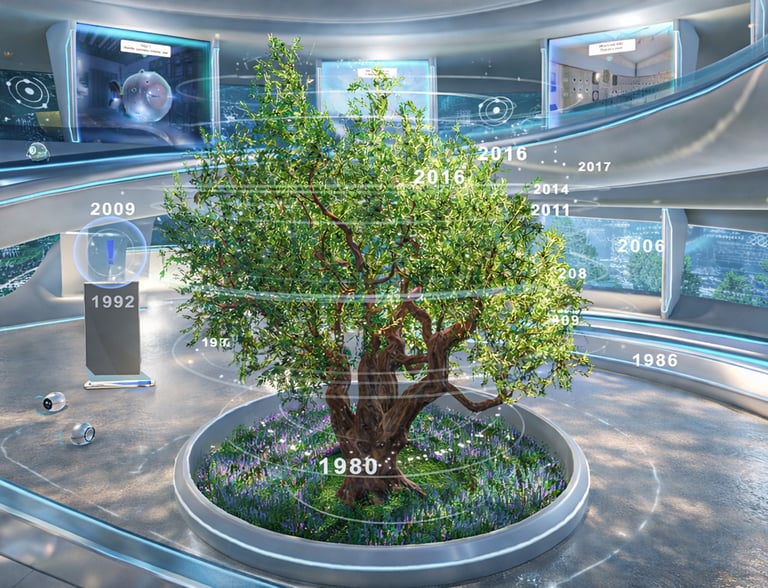
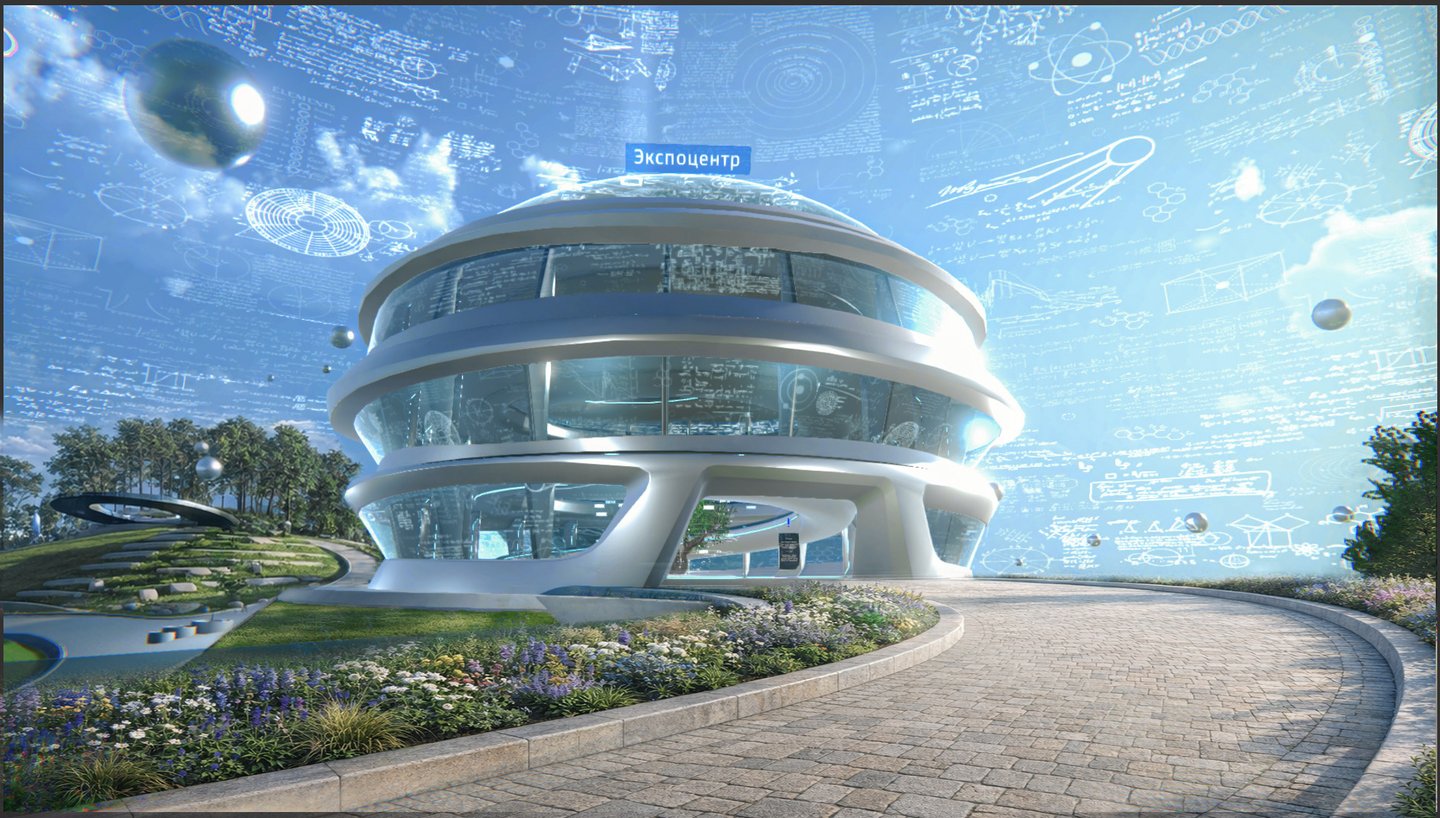
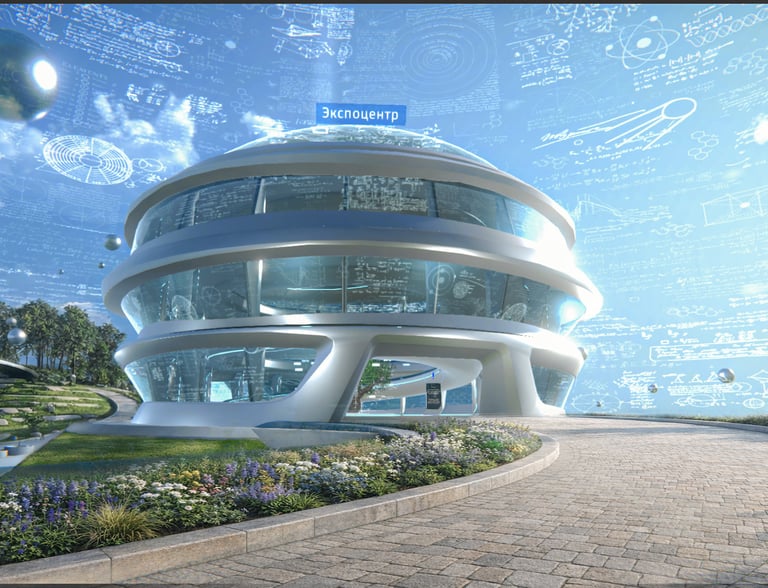
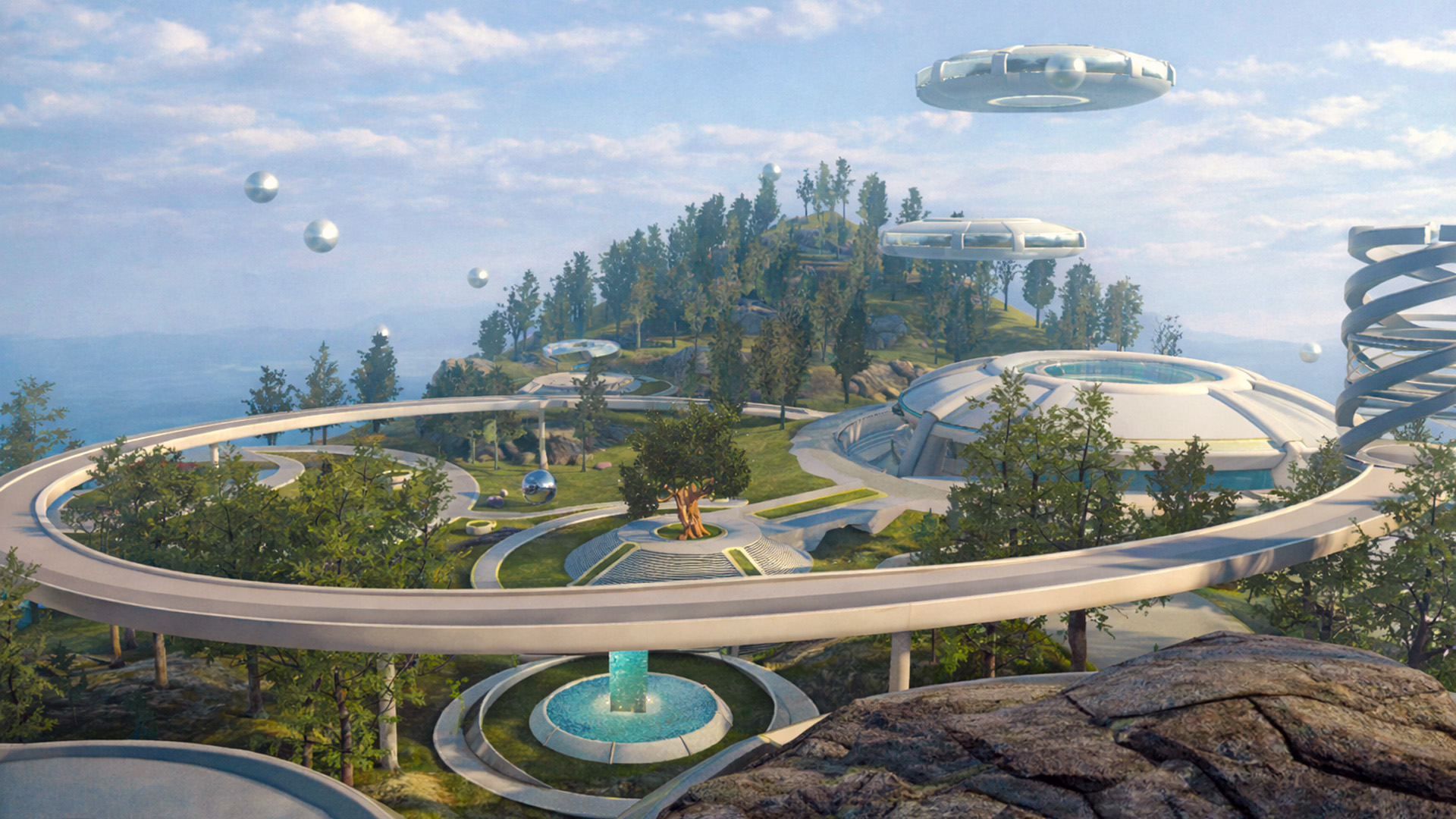
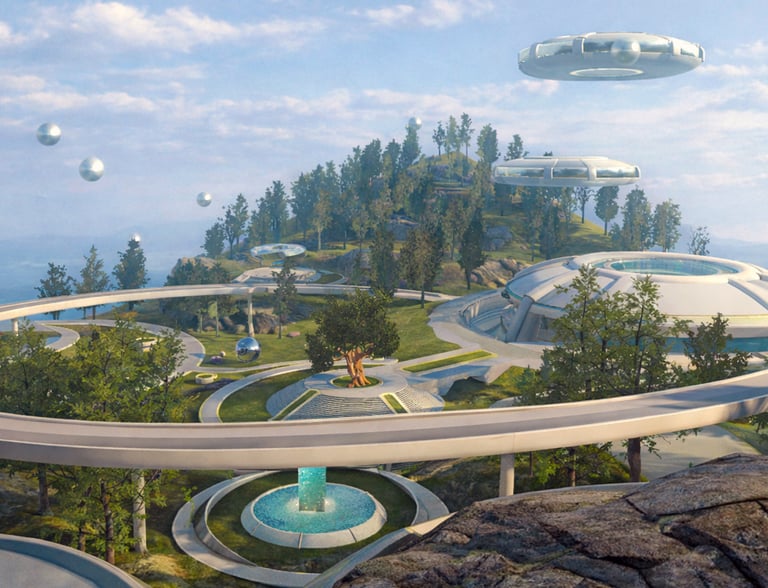
An open environment built around a coworking hub. The building itself does not contain rooms; instead, it serves as a gateway where users can create or join coworking sessions. Actual collaboration spaces are separate scenes, each tailored to a specific format such as small group work, round-table discussions, or presentations, allowing focused interaction without fragmenting the open world.
Coworking Zone
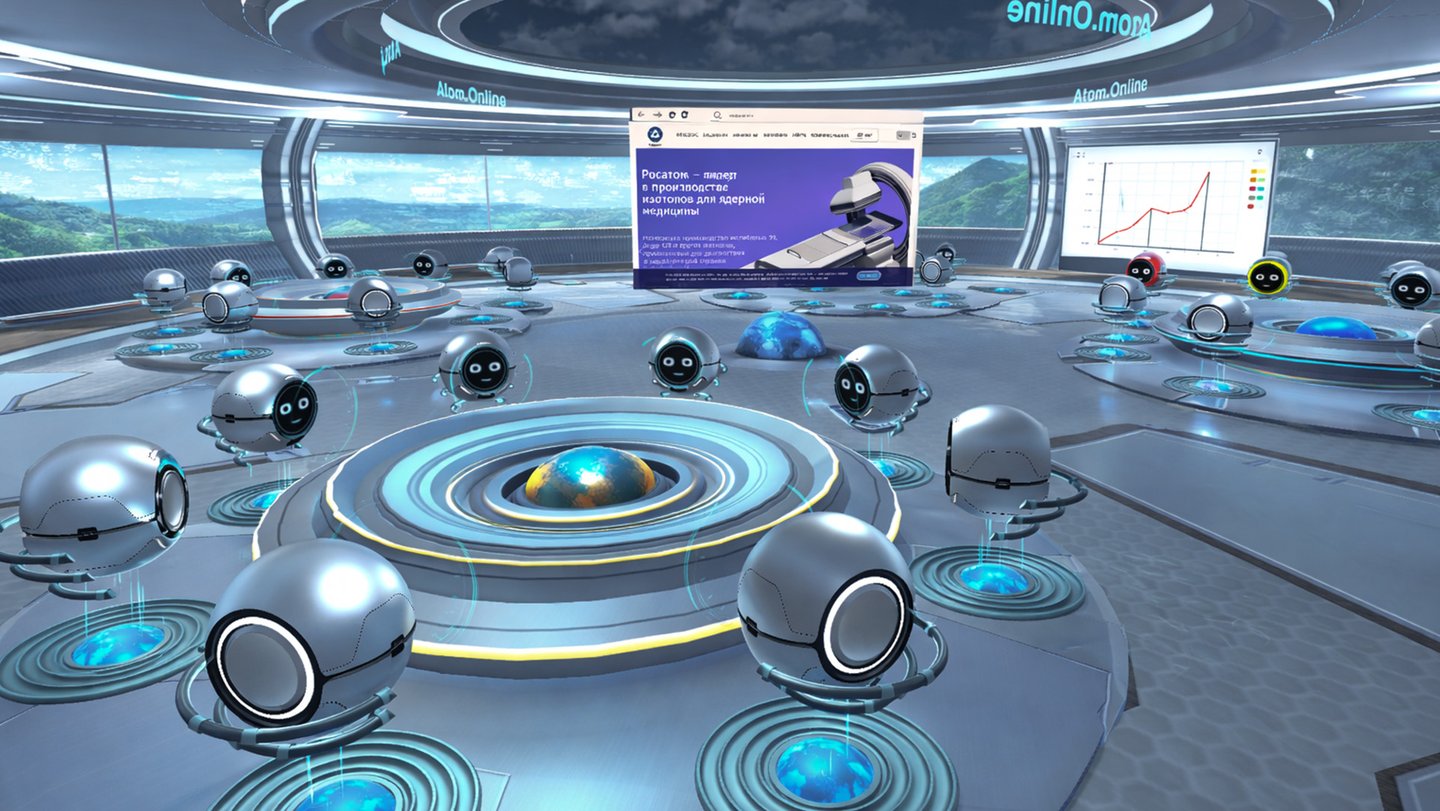
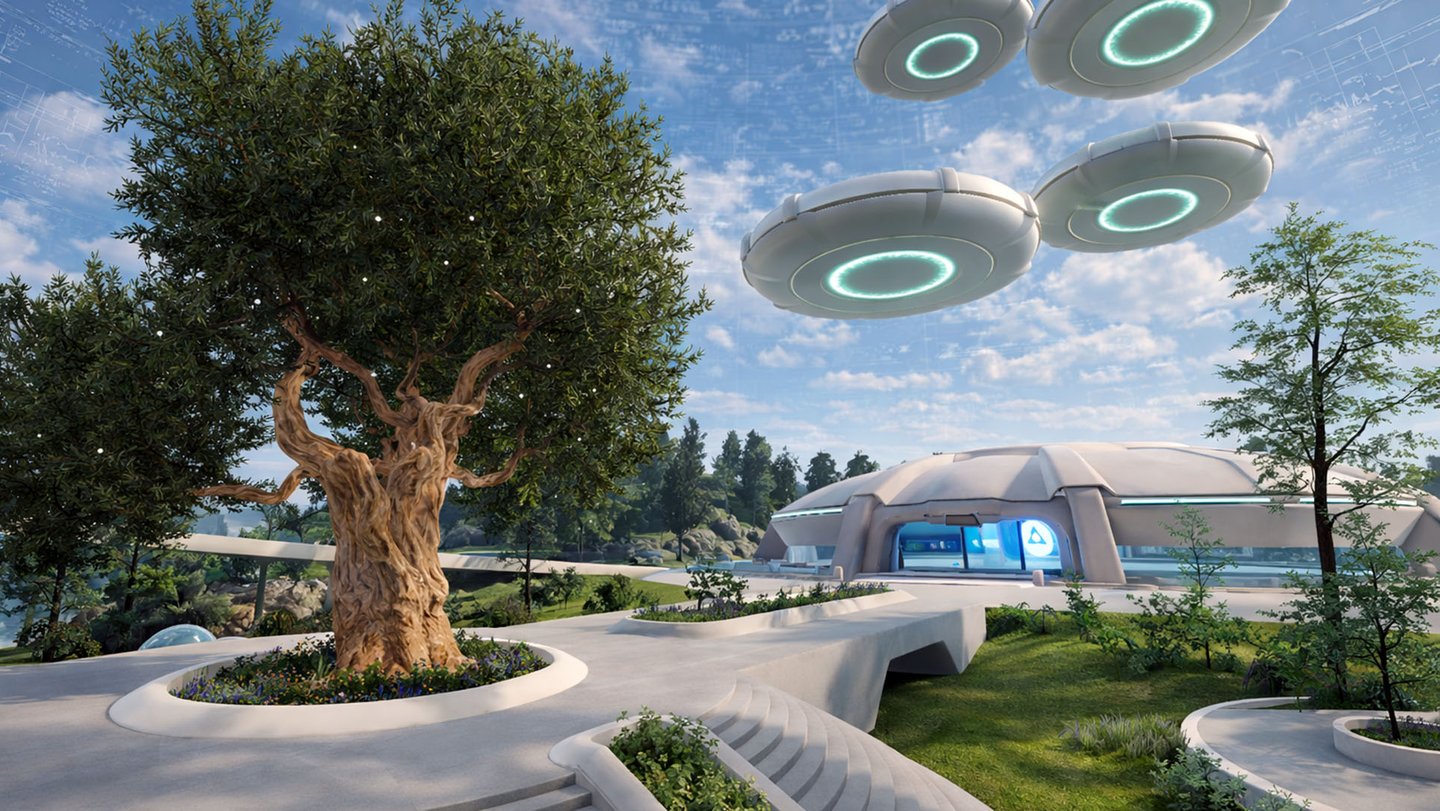
Using the collaboration zone to realign existing environments
Once the collaboration zone was established, I used it as a reference point to rework the conference and expo zones. Together with the team, I revisited scale, lighting balance, material consistency, and scene composition to bring these areas in line with the newly defined standards. The goal was not to redesign them, but to rebalance their visuals and structure so all zones felt like parts of the same world.
key decisions & Contribution
Translating corporate guidelines into actionable art direction
The project followed strict corporate guidelines calling for a minimal, sterile sci-fi aesthetic. Rather than treating these as abstract preferences, I decoded them into practical rules for geometry complexity, material usage, lighting contrast, color range, and surface treatment. This allowed the team to work within clear boundaries while maintaining visual coherence, depth, and legibility, without introducing elements that would conflict with the client’s expectations.
Making an existing world layout work in practice
When I joined the project, the world was already divided into three large zones connected through a central hub. My work focused on making this structure understandable during real use. I clarified how each zone is entered, what activity it represents, and how users return to the hub without getting lost. This reduced aimless roaming and made movement between exploration, events, and work spaces predictables.
Designing and building with performance limits in mind
The platform had to run reliably on standard office PCs, even during large events with thousands of users. I treated this as a fixed constraint and adjusted visual decisions accordingly. Alongside directing the team, I worked hands-on on environment assets, lighting setups, shaders, effects, and scene assembly, and helped streamline pipelines so the world remained stable, responsive, and visually consistent under load.
Contributing hands-on while leading art and technical execution
Due to tight deadlines and limited resources, I combined art direction with hands-on production. I directly worked on environment assets, architectural models, lighting setups, shaders, effects, scene assembly, and optimization, while coordinating 3D and technical artists. In parallel, I helped define pipelines and performance targets to ensure the project remained stable on standard office hardware.
Defining the design baseline
I fully designed the collaboration zone from scratch, using only the predefined world layout as a constraint. I established its spatial structure, navigation, scale, architectural logic, lighting approach, and level of visual density. This zone became the first area where visual rules, performance limits, and interaction logic were resolved together in practice, forming a concrete reference for how the entire platform should look, feel, and function.
Early Promo

Or explore more of my work:
Or explore more of my work: